







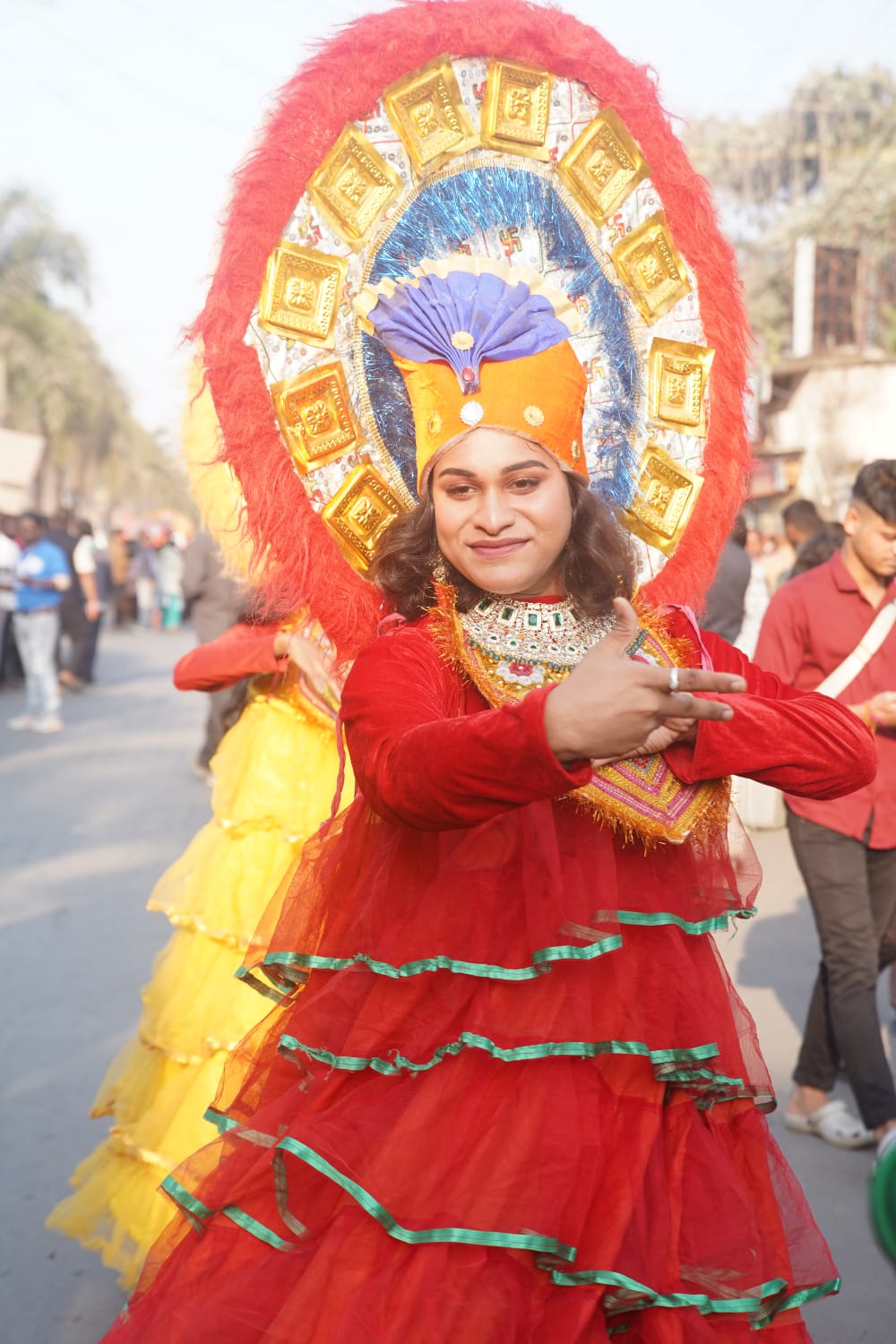
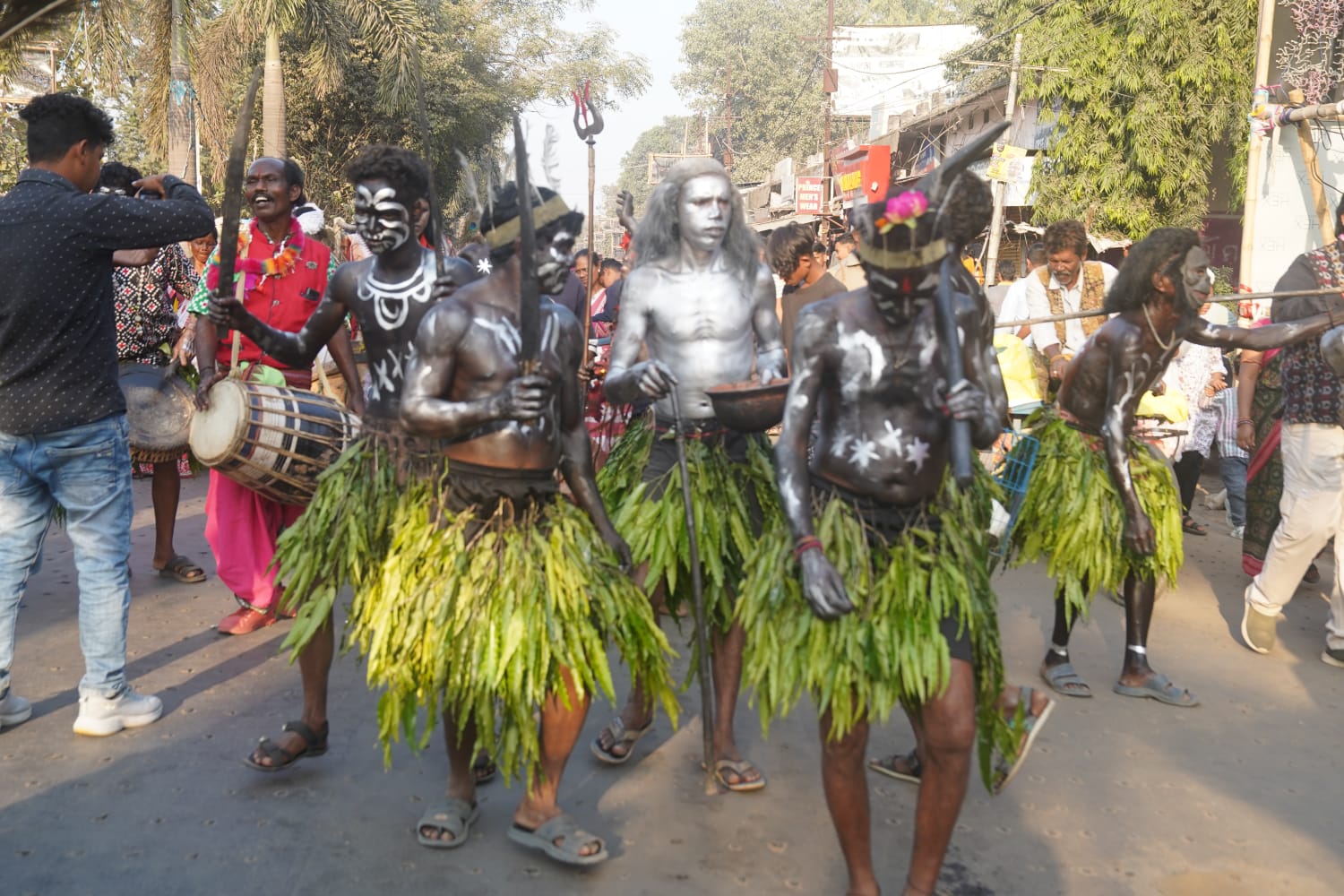
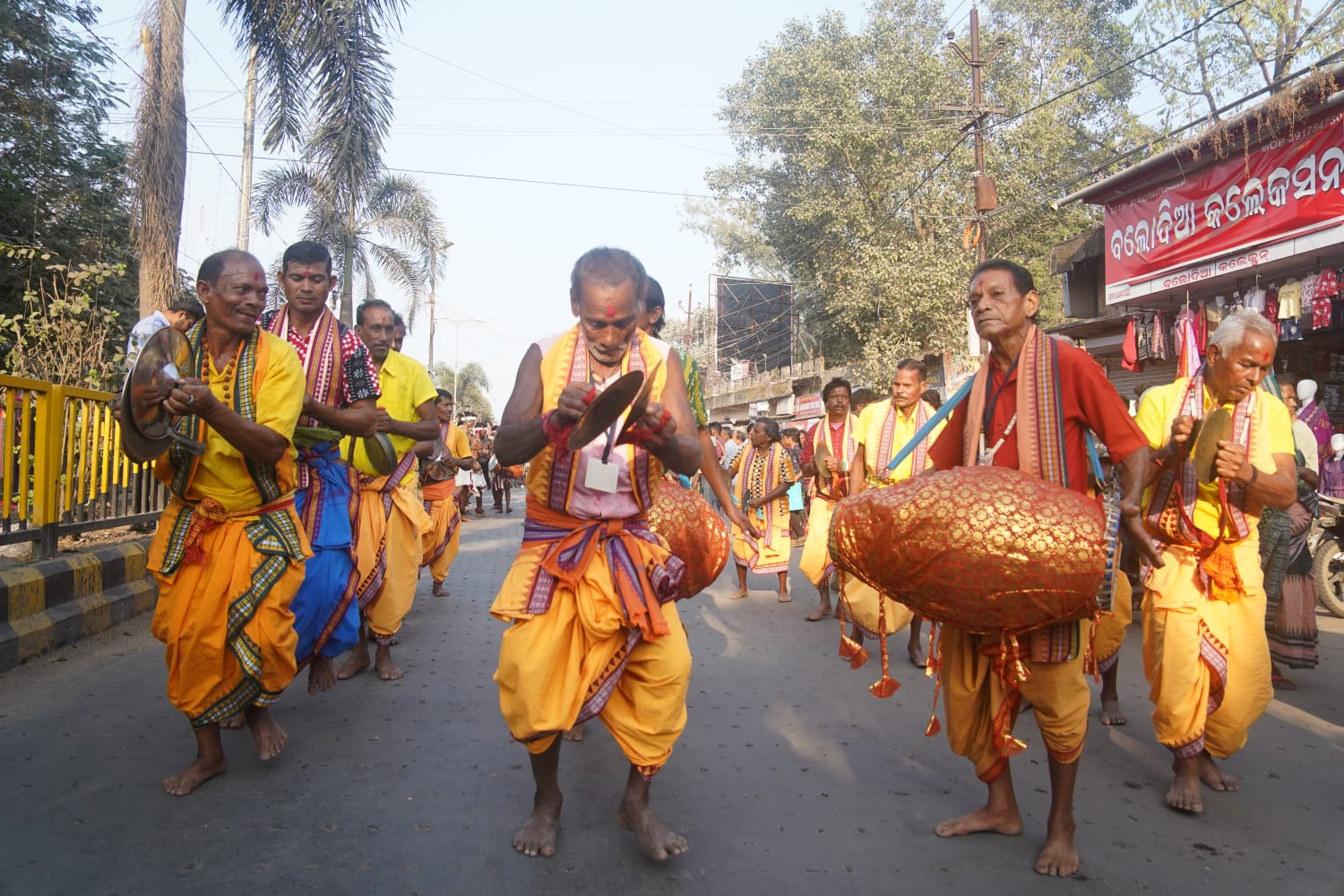
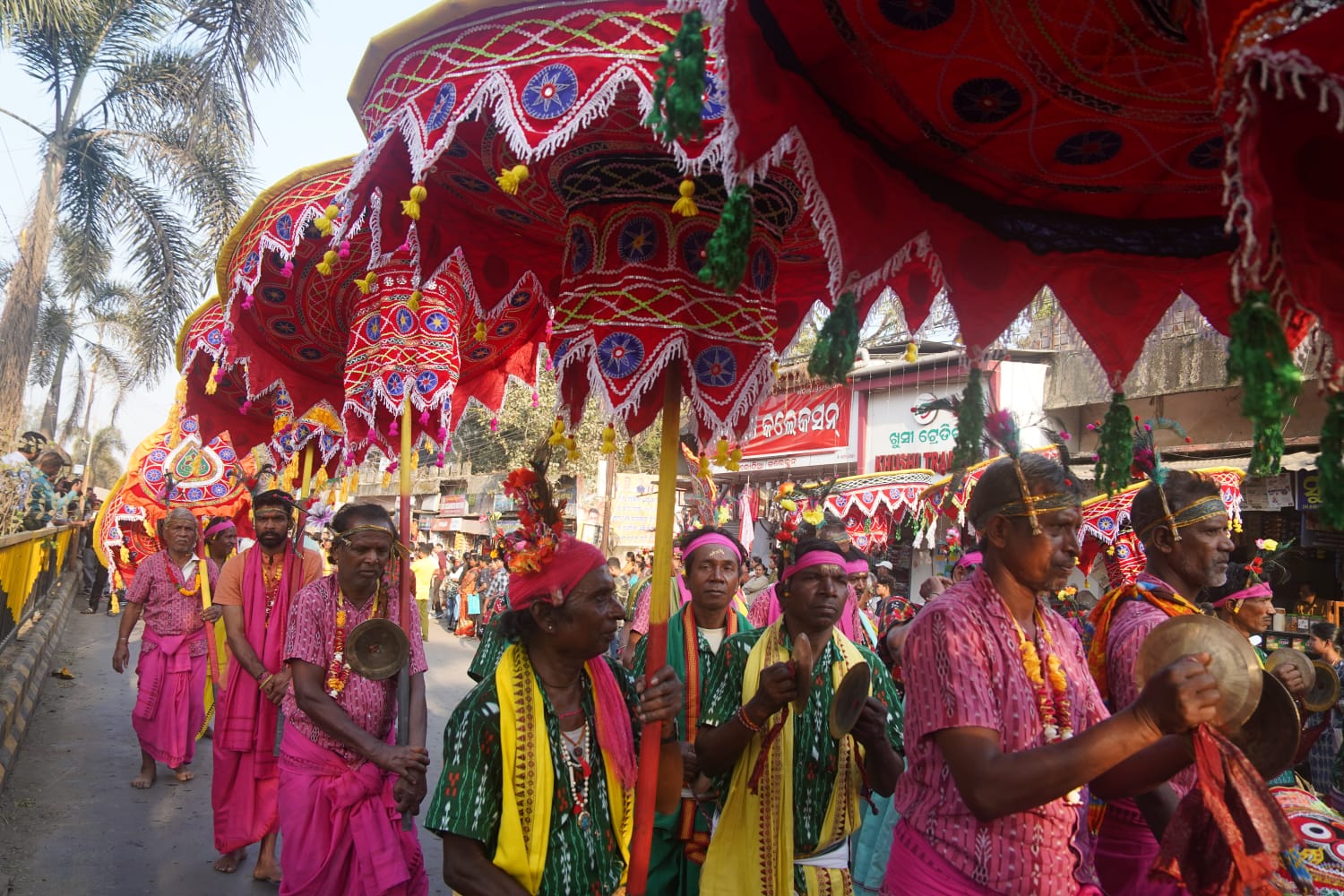
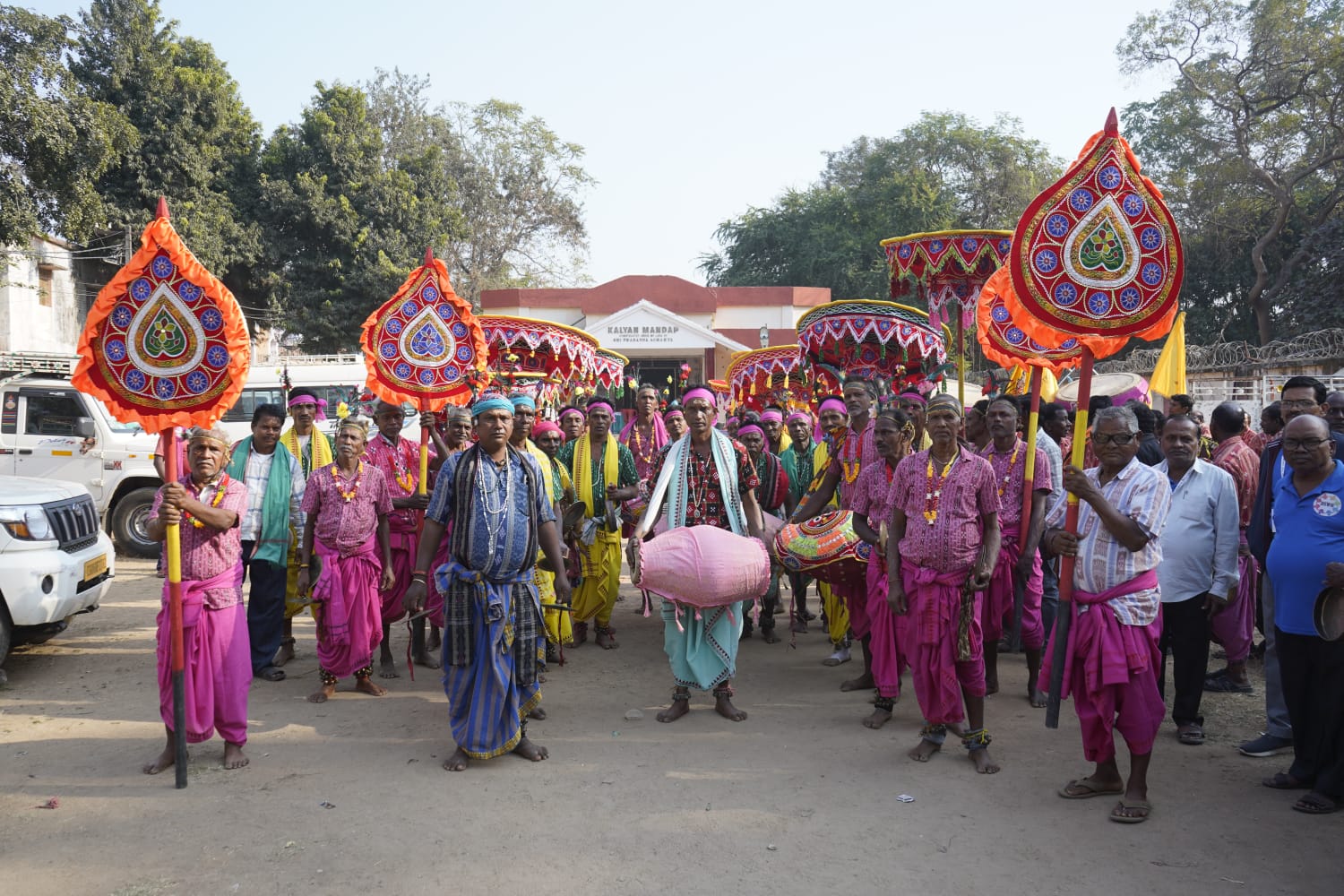
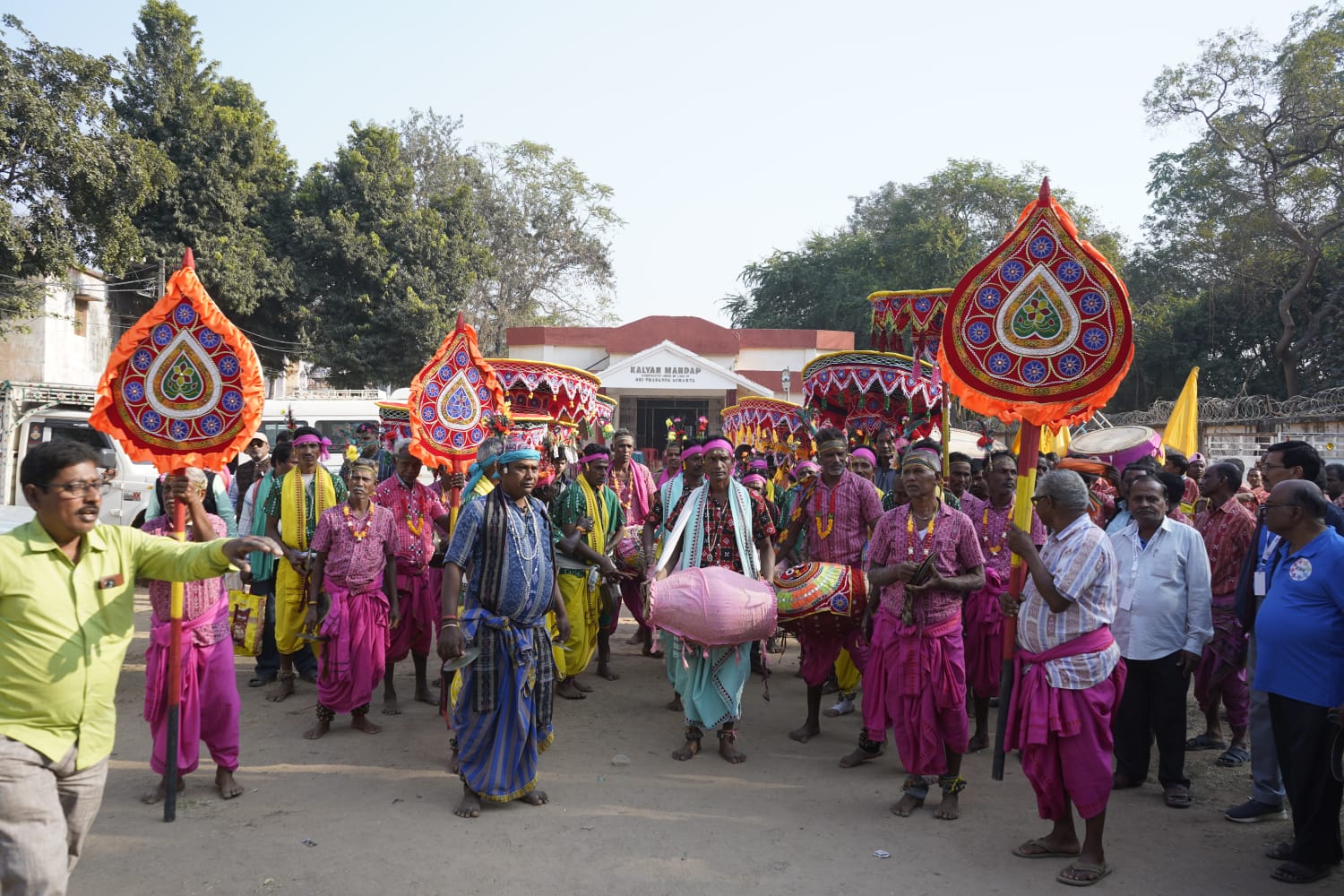
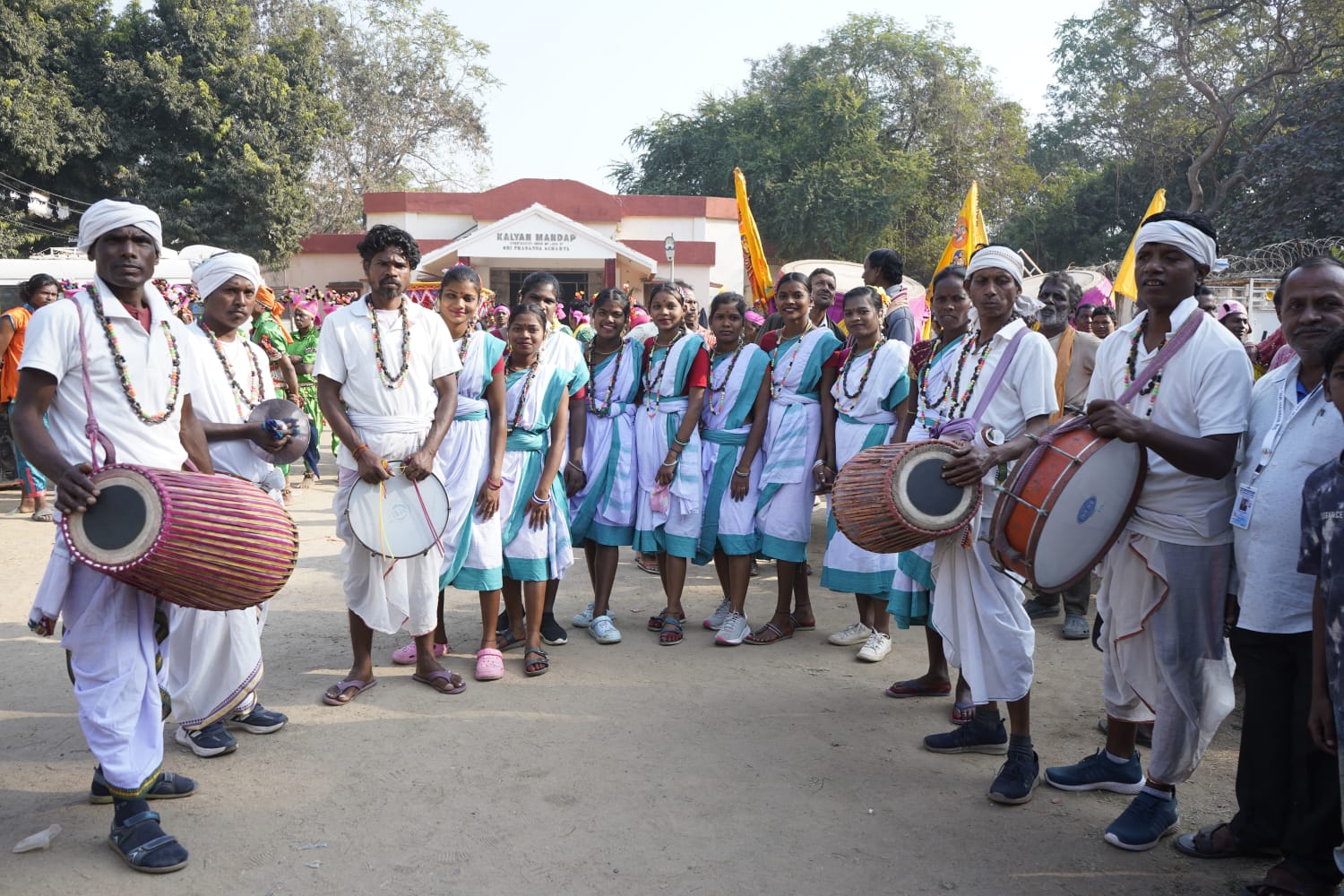
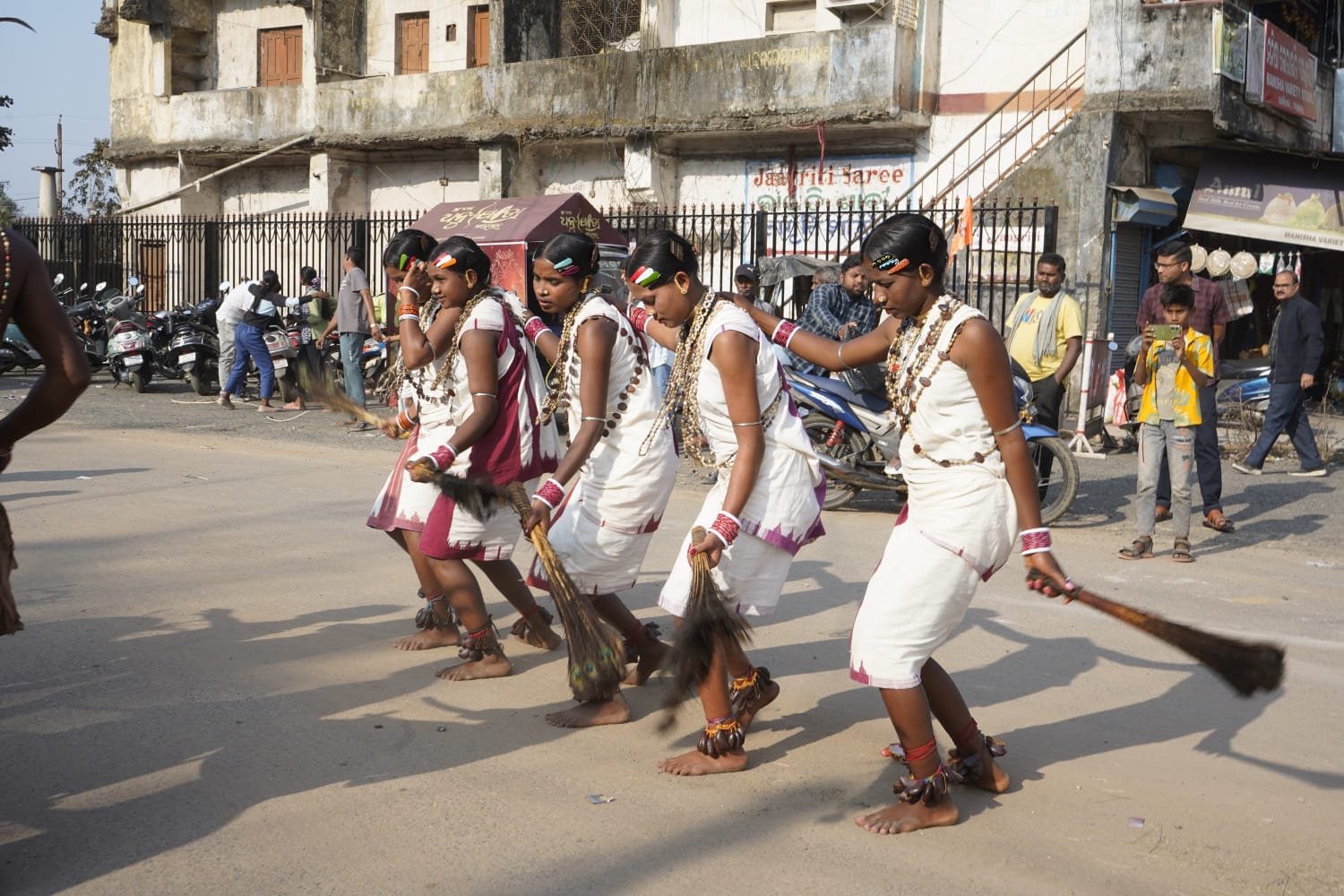
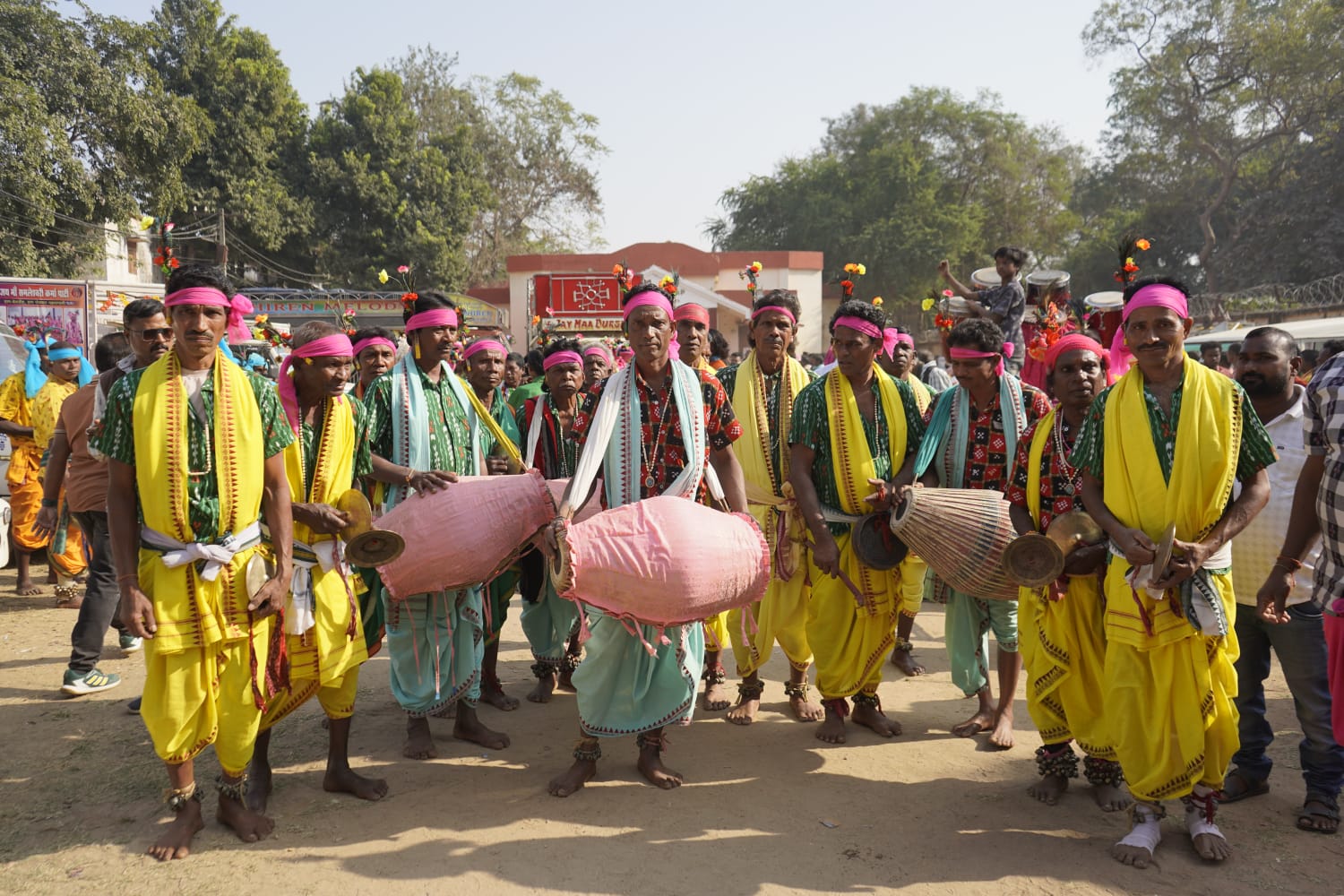
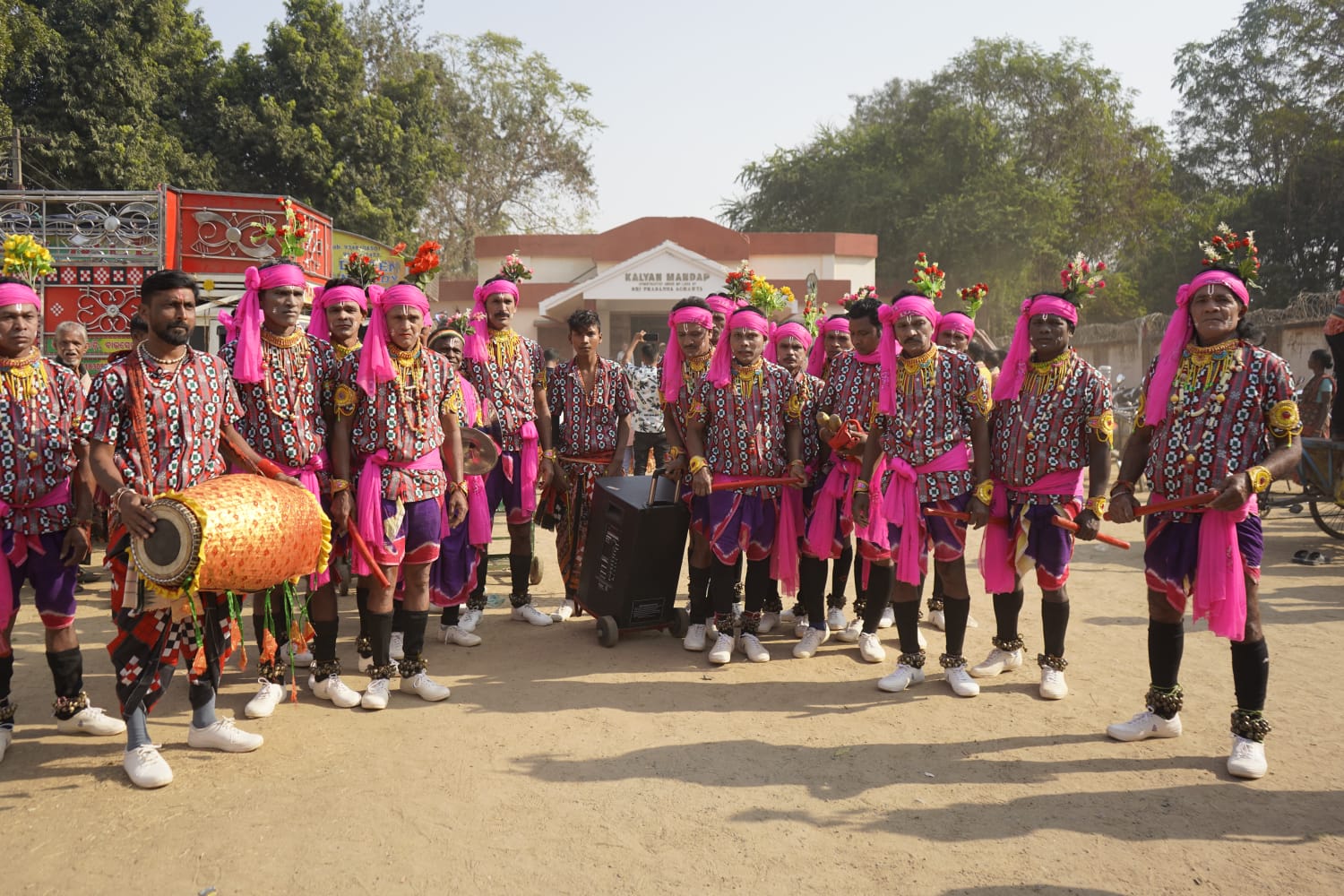





 Cultural Program at 2 PM Evening 7.00 P.M: Raj darbar(Hatapada) inauguration of Dhanujatra. Get direction Devaki & Basudev’s marriage in Ramji temple & the word of gospel. Get direction Ascension of throne by Kansa & dethroning of King Ugrasen. Get direction Sending of Devaki & Basudev to prison. Get direction
ଦିବା ୨ଘ. : ସାଂସ୍କୃତିକ ଶୋଭାଯାତ୍ରା ସନ୍ଧ୍ୟା ୭ଘ. : ରାଜଦରବାର(ହାଟପଦା) ରେ ଧନୁଯାତ୍ରା ମହୋତ୍ସବ ଉଦଘାଟନ ସମାରୋହ ଦିଗ ପାଆନ୍ତୁ ରାମଜୀ ମନ୍ଦିରରେ ଦେବକୀ ଓ ବସୁଦେବଙ୍କ ବିବାହ, ଦୈବବାଣୀ ଦିଗ ପାଆନ୍ତୁ ଉଗ୍ରସେନଙ୍କୁ ଗାଦିଚ୍ୟୁତ କରି କଂସର ସିଂହାସନ ଆରୋହଣ ଦିଗ ପାଆନ୍ତୁ ଦେବକୀ ଓ ବସୁଦେବଙ୍କ କାରାଗାର ପ୍ରେରଣ ଦିଗ ପାଆନ୍ତୁ
Cultural Program at 2 PM Evening 7.00 P.M: Raj darbar(Hatapada) inauguration of Dhanujatra. Get direction Devaki & Basudev’s marriage in Ramji temple & the word of gospel. Get direction Ascension of throne by Kansa & dethroning of King Ugrasen. Get direction Sending of Devaki & Basudev to prison. Get direction
ଦିବା ୨ଘ. : ସାଂସ୍କୃତିକ ଶୋଭାଯାତ୍ରା ସନ୍ଧ୍ୟା ୭ଘ. : ରାଜଦରବାର(ହାଟପଦା) ରେ ଧନୁଯାତ୍ରା ମହୋତ୍ସବ ଉଦଘାଟନ ସମାରୋହ ଦିଗ ପାଆନ୍ତୁ ରାମଜୀ ମନ୍ଦିରରେ ଦେବକୀ ଓ ବସୁଦେବଙ୍କ ବିବାହ, ଦୈବବାଣୀ ଦିଗ ପାଆନ୍ତୁ ଉଗ୍ରସେନଙ୍କୁ ଗାଦିଚ୍ୟୁତ କରି କଂସର ସିଂହାସନ ଆରୋହଣ ଦିଗ ପାଆନ୍ତୁ ଦେବକୀ ଓ ବସୁଦେବଙ୍କ କାରାଗାର ପ୍ରେରଣ ଦିଗ ପାଆନ୍ତୁ Evening 6.00 P.M: Rangmahal (Lokamandap ground) inauguration. Get direction Birth of Sri Krishna in the Samaleswari Mandap’s prison. Get direction Journey of Sri Krishna with Basudev. Meeting with Ugrasen.Return to Mathura with Bijuli kanya. Kansa’s fight with Durmila demon & her defeat. Get direction Sunmmoning of Chanura & Mustika.
ସନ୍ଧ୍ୟା ୬ଘ. : ରଙ୍ଗମହଲ(ଲୋକପଡ଼ିଆ) ର ଉଦଘାଟନ ଦିଗ ପାଆନ୍ତୁ ରାତିରେ ସମଲେଶ୍ଵରୀ ମଣ୍ଡପସ୍ଥିତ କାରାଗାରରେ ଶ୍ରୀକୃଷ୍ଣ ଜନ୍ମ ଦିଗ ପାଆନ୍ତୁ ଶ୍ରୀକୃଷ୍ଣଙ୍କୁ ନେଇ ବସୁଦେବଙ୍କ ଗୋପପୁର ଯାତ୍ରା ବିଜୁଳିକନ୍ୟାଙ୍କ ସହ ମଥୁରାକୁ ପ୍ରତ୍ୟାବର୍ତ୍ତନ ଦୁର୍ମିଳା ରାକ୍ଷସ ସହ କଂସଙ୍କ ଯୁଦ୍ଧ, ଦୁର୍ମିଳା ରାକ୍ଷସ ନିହତ ଦିଗ ପାଆନ୍ତୁ ଚାଣୁର ସୃଷ୍ଟିକଙ୍କୁ ଆବାହନ
Evening 6.00 P.M: Rangmahal (Lokamandap ground) inauguration. Get direction Birth of Sri Krishna in the Samaleswari Mandap’s prison. Get direction Journey of Sri Krishna with Basudev. Meeting with Ugrasen.Return to Mathura with Bijuli kanya. Kansa’s fight with Durmila demon & her defeat. Get direction Sunmmoning of Chanura & Mustika.
ସନ୍ଧ୍ୟା ୬ଘ. : ରଙ୍ଗମହଲ(ଲୋକପଡ଼ିଆ) ର ଉଦଘାଟନ ଦିଗ ପାଆନ୍ତୁ ରାତିରେ ସମଲେଶ୍ଵରୀ ମଣ୍ଡପସ୍ଥିତ କାରାଗାରରେ ଶ୍ରୀକୃଷ୍ଣ ଜନ୍ମ ଦିଗ ପାଆନ୍ତୁ ଶ୍ରୀକୃଷ୍ଣଙ୍କୁ ନେଇ ବସୁଦେବଙ୍କ ଗୋପପୁର ଯାତ୍ରା ବିଜୁଳିକନ୍ୟାଙ୍କ ସହ ମଥୁରାକୁ ପ୍ରତ୍ୟାବର୍ତ୍ତନ ଦୁର୍ମିଳା ରାକ୍ଷସ ସହ କଂସଙ୍କ ଯୁଦ୍ଧ, ଦୁର୍ମିଳା ରାକ୍ଷସ ନିହତ ଦିଗ ପାଆନ୍ତୁ ଚାଣୁର ସୃଷ୍ଟିକଙ୍କୁ ଆବାହନ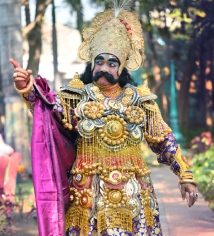 Basudev’s arrival at Gopapura. Entry in Mathura with Bijuli Kanya.
ଶ୍ରୀକୃଷ୍ଣଙ୍କୁ ନେଇ ବସୁଦେବଙ୍କ ଗୋପପୁରରେ ପ୍ରବେଶ, ବିଜୁଳିକନ୍ୟାଙ୍କ ସହ ମଥୁରାରେ ପ୍ରବେଶ
Basudev’s arrival at Gopapura. Entry in Mathura with Bijuli Kanya.
ଶ୍ରୀକୃଷ୍ଣଙ୍କୁ ନେଇ ବସୁଦେବଙ୍କ ଗୋପପୁରରେ ପ୍ରବେଶ, ବିଜୁଳିକନ୍ୟାଙ୍କ ସହ ମଥୁରାରେ ପ୍ରବେଶ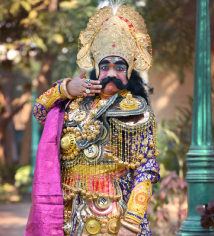 Kansa Maharaj visits Sameswar Mahadev. Kansa’s discussion in the Raj darbar Get direction Advice of Narada. Putana-Sadamala summoning & sent to Gopapura.
କଂସ ମହାରାଜାଙ୍କ ଶ୍ୟାମେଶ୍ଵର ମହାଦେବ ଦର୍ଶନ କାରାଗାର ପ୍ରବେଶ, ବିଜୁଳିକ୍ୟାଙ୍କୁ ପାଷାଣରେ ପ୍ରହାର , ଦୈବବାଣୀ ଦିଗ ପାଆନ୍ତୁ ରାଜଦରବାରରେ କଂସଙ୍କ ମନ୍ତ୍ରଣା ନାରଦଙ୍କ ଉପଦେଶ ପୂତନା- ଷଡ଼ମଲ୍ଲ ଆବାହନ ଓ ଗୋପପୁର ପ୍ରେରଣ
4.00 P.M : Nanda darbar inauguration & Nanda Utsav. Krishna’s swinging & Rasleela. Devotional procession of Sri Krishna throughout Gopapura.
ଅପରାହ୍ନ ୪ଘ. : ନନ୍ଦ ଦରବାର ଉଦଘାଟନ, ନନ୍ଦୋତ୍ସବ କୃଷ୍ଣଙ୍କ ଦୋଳିଝୁଲା, ରାସ ନୃତ୍ୟ ନଗର ସଂକୀର୍ତ୍ତନ ସହ କୃଷ୍ଣଙ୍କ ଗୋପପୁର ଭ୍ରମଣ
Defeat of Banasura & Kansa’s grief after death of Sadamala. Rani Padmabati prepares for “Dhanusree” brat. Rudravishek of Mukteswar baba by Kansa (Sales Tax office compound).
ବାଣାସୁର ପରାଜୟ, ଷଡ଼ମଲ୍ଲଙ୍କ ମୃତ୍ୟୁ ଖବର ପାଇ କଂସର ଶୋକ ରାଣୀ ପଦ୍ମାବତୀଙ୍କ ଧନୁଶ୍ରୀ ଓଷା ପାଇଁ ପ୍ରସ୍ତୁତି କଂସଙ୍କ ଦ୍ଵାରା ମୁକ୍ତେଶ୍ଵର ବାବା ଙ୍କ ରୁଦ୍ରାଭିଶେକ ( ସେଲଟେକ୍ସ୍ ଅଫିସ୍ ପରିସର)
Sri Krishna’s baal Leela Putana, Baka, Sakata, Truna, Dhenu, Sandhasura were killed & commencement Nanda utsav
ଶ୍ରୀକୃଷ୍ଣଙ୍କ ବାଲ୍ୟ ଲୀଳା କଂସ ପ୍ରେରିତ ପୁତନା, ବକା, ଶକଟା, ତୃଣା, ଧେନୁ, ଷଣ୍ଢାସୁର, ଆଦିଙ୍କୁ ବଧ ଓ ସନ୍ଦୋତ୍ସବ
Kansa’s war with Jarasandha & marriage with Heti and Praheti. Kansa’s digvijay in bramhachari area. Kansa’s sorrow on hearing news of demon’s killing & meeting in the royal court with counsel.
ଜରାସନ୍ଧ ସହ ଯୁଦ୍ଧ ଏବଂ ହେତୀ-ପ୍ରହେତୀ ଙ୍କ ସହ ବିବାହ କଂସ ମହାରାଜାଙ୍କ ବ୍ରହ୍ମଚାରୀ ଅଞ୍ଚଳରେ ଦିଗବିଜୟ ରାକ୍ଷସ-ରାକ୍ଷସୀଙ୍କ ନିଧନ ଖବର ପାଇ କଂସ ମର୍ମାହତ, ପରିଷଦ ବର୍ଗଙ୍କ ସହ ଅପାଦ ବୈଠକ
Krishna & Balaram’s baal Leela.
Get direction
Jamalarjuna killing and dance on Kaliya’s head.
Get direction
Vishwaroop darshan & Gopi’s curd selling.
Get direction
କୃଷ୍ଣ-ବଳରାମଙ୍କ ବାଲ୍ୟ ଲୀଳା
ଦିଗ ପାଆନ୍ତୁ
ଜାମକାର୍ଯୁନ ଭଞ୍ଜନ, କଳୀୟ ଦଳନ
ଦିଗ ପାଆନ୍ତୁ
ବିଶ୍ଵରୂପ ଦର୍ଶନ, ଗୋପୀଙ୍କ ଦଧି ବିକା
ଦିଗ ପାଆନ୍ତୁ
Ranga sabha, discussion in royal court for coming war with King’s counsel. Janta darbar with administrative officers. Sankhachud sent to Gopapura.
ରଙ୍ଗାସଭା, ଆସନ୍ନ ଯୁଦ୍ଧ ପ୍ରସ୍ତୁତି ପାଇଁ ରାଜନ୍ୟ ବର୍ଗଙ୍କ ସହ ଆଲୋଚନା ପ୍ରଶାସନିକ ଅଧିକାରୀମାନଙ୍କ ସହ ଜନତା ଦରବାର ଶଙ୍ଖଚୁଡ଼ଙ୍କୁ ଗୋପପୁର ପ୍ରେରଣ
Gopi’s curd selling & Bastraharan.
Get direction
ଗୋପୀଙ୍କ ଦଧି ବିକା ଓ ବସ୍ତ୍ର ହରଣ
ଦିଗ ପାଆନ୍ତୁ
Akrura went to Gopapur to invite Sri Krishna-Balaram on advice of Narada for Dhanujatra. Kansa’s city tour. Durga Stuti at Hatapada Durga Temple. Deliberation in Royal Court.
ଧନୁଯାତ୍ରାକୁ ନାରଦ ଙ୍କ ପରାମର୍ଶ କ୍ରମେ ଶ୍ରୀକୃଷ୍ଣ ବଳରାମଙ୍କୁ ନିମନ୍ତ୍ରଣ ପାଇଁ ଅକ୍ରୁରଙ୍କୁ ଗୋପପୁର ପ୍ରେରଣ କଂସଙ୍କ ନଗର ଭ୍ରମଣ ହାଟପଦା ଦୁର୍ଗା ମନ୍ଦିର ଠାରେ ଦୁର୍ଗା ସ୍ତୁତି ରାଜଦରବାରରେ ନ୍ୟାୟ ବିଚାର
Gopi’s curd selling & Dance of Radha Krishna (Baragada Mana Bandha). Get direction Killing of Sankhachud.
Get direction
Different programs in Nanda Darbar.
Get direction
ଗୋପୀଙ୍କ ଦଧିବିକା ଓ ରାଧା-କୃଷ୍ଣଙ୍କ ନାବକେଳୀ ( ବରଗଡ଼ ମନାବନ୍ଧ) ଦିଗ ପାଆନ୍ତୁ ଶଙ୍ଖଚୁଡ଼ ବଧ
ଦିଗ ପାଆନ୍ତୁ
ନନ୍ଦ ଦରବାରରେ ବିଭିନ୍ନ କାର୍ଯ୍ୟକ୍ରମ
ଦିଗ ପାଆନ୍ତୁ
Akrura went to Gopapur to invite Sri Krishna-Balaram. Battle and captivity with Indra. Attack on Yamapur. Kansa’s City tour.
ଶ୍ରୀକୃଷ୍ଣ ବଳରାମଙ୍କୁ ନିମନ୍ତ୍ରଣ ପାଇଁ ଅକ୍ରୁରଙ୍କ ଗୋପପୁର ଗମନ ଇନ୍ଦ୍ରଙ୍କ ସହିତ ଯୁଦ୍ଧ ଓ ବନ୍ଦୀ ଯମପୁର ଆକ୍ରମଣ କଂସଙ୍କ ନଗର ଭ୍ରମଣ
Lifting of Govardhan Giri by Sri Krishna.
Get direction
Entry of Akrura in Gopapur. Darshan of Sri Krishna’s foor prints at Jamuna river.
Get direction
Meeting of Akrura with Sri Krishna – Balaram.
ଶ୍ରୀକୃଷ୍ଣଙ୍କ ଗିରି ଗୋବର୍ଦ୍ଧନ ଧାରଣ
ଦିଗ ପାଆନ୍ତୁ
ଅକ୍ରୁରଙ୍କ ଗୋପପୁର ପ୍ରବେଶ ଯମୁନା ନଇରେ ଶ୍ରୀକୃଷ୍ଣଙ୍କ ପାଦଚିହ୍ନ ଦର୍ଶନ
ଦିଗ ପାଆନ୍ତୁ
କୃଷ୍ଣ ବଳରାମଙ୍କ ସହ ଅକ୍ରୁରଙ୍କ ସାକ୍ଷାତ
Kansa's oppression of the sages immersed in Lord Krishna devotion in the Mathura Amravana (Govindapali Hanuman Temple Courtyard.
Get direction
Attainment of rudshuka. Shiva Tandav. Entry of Sri Krishna-Balaram into Mathura.
ମଥୁରା ଆମ୍ରବନ ( ଗୋବିନ୍ଦପାଲି ହନୁମାନ ମନ୍ଦିର ପ୍ରାଙ୍ଗଣ ) ରେ ଶ୍ରୀକୃଷ୍ଣ ଭକ୍ତିରେ ନିମଗ୍ନ , ମୁନି ଋଷିଙ୍କ ଉପରେ କଂସର ଅତ୍ୟାଚାର
ଦିଗ ପାଆନ୍ତୁ
ରୁଦ୍ରଶୂକ ପ୍ରାପ୍ତି ଶିବ ତାଣ୍ଡବ କୃଷ୍ଣ ବଳରାମ ଙ୍କ ମଥୁରାରେ ପ୍ରବେଶ
The departure of Krishna-Balaram and the mourning of the gopi’s. Get direction Akrura's journey to Mathura with Krishna-Balaram.
କୃଷ୍ଣ ବଳରାମଙ୍କ ବିଦାୟ ଉତ୍ସବ ଓ ଗୋପୀମାନଙ୍କ ବିଳାପ ଦିଗ ପାଆନ୍ତୁ କୃଷ୍ଣ ବଳରାମଙ୍କୁ ଧରି ଅକ୍ରୁରଙ୍କ ମଥୁରା ଅଭିମୁଖେ ଯାତ୍ରା
Universal victory of King Kansa. Get direction Preparation of Kansa's plan to kill Krishna-Balaram. Kansa’s shadow and Kansa’s dream. Krishna-Balaram's meeting with Sudama Mali and Rajaka.
Get direction
Kubuja Rescue in Kali Temple
Get direction
Krishna-Balram's city tour and rest at Vandavan's house
କଂସ ମହାରାଜାଙ୍କ ଦିଗ୍ ବିଜୟ କୃଷ୍ଣ ବଳରାମଙ୍କ ହତ୍ୟା ପାଇଁ କଂସଙ୍କ ଯୋଜନା ପ୍ରସ୍ତୁତି ଦିଗ ପାଆନ୍ତୁ କଂସର ଛାୟା, କଂସର ସ୍ବପ୍ନ କୃଷ୍ଣ ବଳରାମଙ୍କ ସୁଦାମା ମାଳି ଓ ରଜକଙ୍କ ସହ ସାକ୍ଷାତ
ଦିଗ ପାଆନ୍ତୁ
କାଳୀ ମନ୍ଦିରରେ କୁବୁଜା ଉଦ୍ଧାର
ଦିଗ ପାଆନ୍ତୁ
କୃଷ୍ଣ ବଳରାମଙ୍କ ନଗର ଭ୍ରମଣ ଏବଂ ବୃନ୍ଦାବନ ଗୃହେ ବିଶ୍ରାମ
Krishna-Balaram's city tour of Mathura. Krishna-Balaram is welcomed at Govindapally Vivekananda Square and Kubalaya’s assassination. Get direction Astamalla assassination. Breaking of Shiv Dhanu. Killing of Kansa.
Get direction
Ugrasen's Coronation
କୃଷ୍ଣ ବଳରାମଙ୍କ ମଥୁରା ଭ୍ରମଣ ଗୋବିନ୍ଦପାଲି ବିବେକାନନ୍ଦ ଛକ ଠାରେ କୃଷ୍ଣ ବଳରାମ ଙ୍କ ସ୍ଵାଗତ ଉତ୍ସବ, କୁବଳୟା ବଧ ଦିଗ ପାଆନ୍ତୁ ଅଷ୍ଟମଲ୍ଲ ବଧ ଶିବ ଧନୁ ଭଗ୍ନ କଂସ ବଧ
ଦିଗ ପାଆନ୍ତୁ
ଉଗ୍ରସେନଙ୍କ ରାଜ୍ୟାଭିଷେକ
Kansa Maharaj visits Sameswar Mahadev. Kansa’s discussion in the Raj darbar Get direction Advice of Narada. Putana-Sadamala summoning & sent to Gopapura.
କଂସ ମହାରାଜାଙ୍କ ଶ୍ୟାମେଶ୍ଵର ମହାଦେବ ଦର୍ଶନ କାରାଗାର ପ୍ରବେଶ, ବିଜୁଳିକ୍ୟାଙ୍କୁ ପାଷାଣରେ ପ୍ରହାର , ଦୈବବାଣୀ ଦିଗ ପାଆନ୍ତୁ ରାଜଦରବାରରେ କଂସଙ୍କ ମନ୍ତ୍ରଣା ନାରଦଙ୍କ ଉପଦେଶ ପୂତନା- ଷଡ଼ମଲ୍ଲ ଆବାହନ ଓ ଗୋପପୁର ପ୍ରେରଣ
4.00 P.M : Nanda darbar inauguration & Nanda Utsav. Krishna’s swinging & Rasleela. Devotional procession of Sri Krishna throughout Gopapura.
ଅପରାହ୍ନ ୪ଘ. : ନନ୍ଦ ଦରବାର ଉଦଘାଟନ, ନନ୍ଦୋତ୍ସବ କୃଷ୍ଣଙ୍କ ଦୋଳିଝୁଲା, ରାସ ନୃତ୍ୟ ନଗର ସଂକୀର୍ତ୍ତନ ସହ କୃଷ୍ଣଙ୍କ ଗୋପପୁର ଭ୍ରମଣ
Defeat of Banasura & Kansa’s grief after death of Sadamala. Rani Padmabati prepares for “Dhanusree” brat. Rudravishek of Mukteswar baba by Kansa (Sales Tax office compound).
ବାଣାସୁର ପରାଜୟ, ଷଡ଼ମଲ୍ଲଙ୍କ ମୃତ୍ୟୁ ଖବର ପାଇ କଂସର ଶୋକ ରାଣୀ ପଦ୍ମାବତୀଙ୍କ ଧନୁଶ୍ରୀ ଓଷା ପାଇଁ ପ୍ରସ୍ତୁତି କଂସଙ୍କ ଦ୍ଵାରା ମୁକ୍ତେଶ୍ଵର ବାବା ଙ୍କ ରୁଦ୍ରାଭିଶେକ ( ସେଲଟେକ୍ସ୍ ଅଫିସ୍ ପରିସର)
Sri Krishna’s baal Leela Putana, Baka, Sakata, Truna, Dhenu, Sandhasura were killed & commencement Nanda utsav
ଶ୍ରୀକୃଷ୍ଣଙ୍କ ବାଲ୍ୟ ଲୀଳା କଂସ ପ୍ରେରିତ ପୁତନା, ବକା, ଶକଟା, ତୃଣା, ଧେନୁ, ଷଣ୍ଢାସୁର, ଆଦିଙ୍କୁ ବଧ ଓ ସନ୍ଦୋତ୍ସବ
Kansa’s war with Jarasandha & marriage with Heti and Praheti. Kansa’s digvijay in bramhachari area. Kansa’s sorrow on hearing news of demon’s killing & meeting in the royal court with counsel.
ଜରାସନ୍ଧ ସହ ଯୁଦ୍ଧ ଏବଂ ହେତୀ-ପ୍ରହେତୀ ଙ୍କ ସହ ବିବାହ କଂସ ମହାରାଜାଙ୍କ ବ୍ରହ୍ମଚାରୀ ଅଞ୍ଚଳରେ ଦିଗବିଜୟ ରାକ୍ଷସ-ରାକ୍ଷସୀଙ୍କ ନିଧନ ଖବର ପାଇ କଂସ ମର୍ମାହତ, ପରିଷଦ ବର୍ଗଙ୍କ ସହ ଅପାଦ ବୈଠକ
Krishna & Balaram’s baal Leela.
Get direction
Jamalarjuna killing and dance on Kaliya’s head.
Get direction
Vishwaroop darshan & Gopi’s curd selling.
Get direction
କୃଷ୍ଣ-ବଳରାମଙ୍କ ବାଲ୍ୟ ଲୀଳା
ଦିଗ ପାଆନ୍ତୁ
ଜାମକାର୍ଯୁନ ଭଞ୍ଜନ, କଳୀୟ ଦଳନ
ଦିଗ ପାଆନ୍ତୁ
ବିଶ୍ଵରୂପ ଦର୍ଶନ, ଗୋପୀଙ୍କ ଦଧି ବିକା
ଦିଗ ପାଆନ୍ତୁ
Ranga sabha, discussion in royal court for coming war with King’s counsel. Janta darbar with administrative officers. Sankhachud sent to Gopapura.
ରଙ୍ଗାସଭା, ଆସନ୍ନ ଯୁଦ୍ଧ ପ୍ରସ୍ତୁତି ପାଇଁ ରାଜନ୍ୟ ବର୍ଗଙ୍କ ସହ ଆଲୋଚନା ପ୍ରଶାସନିକ ଅଧିକାରୀମାନଙ୍କ ସହ ଜନତା ଦରବାର ଶଙ୍ଖଚୁଡ଼ଙ୍କୁ ଗୋପପୁର ପ୍ରେରଣ
Gopi’s curd selling & Bastraharan.
Get direction
ଗୋପୀଙ୍କ ଦଧି ବିକା ଓ ବସ୍ତ୍ର ହରଣ
ଦିଗ ପାଆନ୍ତୁ
Akrura went to Gopapur to invite Sri Krishna-Balaram on advice of Narada for Dhanujatra. Kansa’s city tour. Durga Stuti at Hatapada Durga Temple. Deliberation in Royal Court.
ଧନୁଯାତ୍ରାକୁ ନାରଦ ଙ୍କ ପରାମର୍ଶ କ୍ରମେ ଶ୍ରୀକୃଷ୍ଣ ବଳରାମଙ୍କୁ ନିମନ୍ତ୍ରଣ ପାଇଁ ଅକ୍ରୁରଙ୍କୁ ଗୋପପୁର ପ୍ରେରଣ କଂସଙ୍କ ନଗର ଭ୍ରମଣ ହାଟପଦା ଦୁର୍ଗା ମନ୍ଦିର ଠାରେ ଦୁର୍ଗା ସ୍ତୁତି ରାଜଦରବାରରେ ନ୍ୟାୟ ବିଚାର
Gopi’s curd selling & Dance of Radha Krishna (Baragada Mana Bandha). Get direction Killing of Sankhachud.
Get direction
Different programs in Nanda Darbar.
Get direction
ଗୋପୀଙ୍କ ଦଧିବିକା ଓ ରାଧା-କୃଷ୍ଣଙ୍କ ନାବକେଳୀ ( ବରଗଡ଼ ମନାବନ୍ଧ) ଦିଗ ପାଆନ୍ତୁ ଶଙ୍ଖଚୁଡ଼ ବଧ
ଦିଗ ପାଆନ୍ତୁ
ନନ୍ଦ ଦରବାରରେ ବିଭିନ୍ନ କାର୍ଯ୍ୟକ୍ରମ
ଦିଗ ପାଆନ୍ତୁ
Akrura went to Gopapur to invite Sri Krishna-Balaram. Battle and captivity with Indra. Attack on Yamapur. Kansa’s City tour.
ଶ୍ରୀକୃଷ୍ଣ ବଳରାମଙ୍କୁ ନିମନ୍ତ୍ରଣ ପାଇଁ ଅକ୍ରୁରଙ୍କ ଗୋପପୁର ଗମନ ଇନ୍ଦ୍ରଙ୍କ ସହିତ ଯୁଦ୍ଧ ଓ ବନ୍ଦୀ ଯମପୁର ଆକ୍ରମଣ କଂସଙ୍କ ନଗର ଭ୍ରମଣ
Lifting of Govardhan Giri by Sri Krishna.
Get direction
Entry of Akrura in Gopapur. Darshan of Sri Krishna’s foor prints at Jamuna river.
Get direction
Meeting of Akrura with Sri Krishna – Balaram.
ଶ୍ରୀକୃଷ୍ଣଙ୍କ ଗିରି ଗୋବର୍ଦ୍ଧନ ଧାରଣ
ଦିଗ ପାଆନ୍ତୁ
ଅକ୍ରୁରଙ୍କ ଗୋପପୁର ପ୍ରବେଶ ଯମୁନା ନଇରେ ଶ୍ରୀକୃଷ୍ଣଙ୍କ ପାଦଚିହ୍ନ ଦର୍ଶନ
ଦିଗ ପାଆନ୍ତୁ
କୃଷ୍ଣ ବଳରାମଙ୍କ ସହ ଅକ୍ରୁରଙ୍କ ସାକ୍ଷାତ
Kansa's oppression of the sages immersed in Lord Krishna devotion in the Mathura Amravana (Govindapali Hanuman Temple Courtyard.
Get direction
Attainment of rudshuka. Shiva Tandav. Entry of Sri Krishna-Balaram into Mathura.
ମଥୁରା ଆମ୍ରବନ ( ଗୋବିନ୍ଦପାଲି ହନୁମାନ ମନ୍ଦିର ପ୍ରାଙ୍ଗଣ ) ରେ ଶ୍ରୀକୃଷ୍ଣ ଭକ୍ତିରେ ନିମଗ୍ନ , ମୁନି ଋଷିଙ୍କ ଉପରେ କଂସର ଅତ୍ୟାଚାର
ଦିଗ ପାଆନ୍ତୁ
ରୁଦ୍ରଶୂକ ପ୍ରାପ୍ତି ଶିବ ତାଣ୍ଡବ କୃଷ୍ଣ ବଳରାମ ଙ୍କ ମଥୁରାରେ ପ୍ରବେଶ
The departure of Krishna-Balaram and the mourning of the gopi’s. Get direction Akrura's journey to Mathura with Krishna-Balaram.
କୃଷ୍ଣ ବଳରାମଙ୍କ ବିଦାୟ ଉତ୍ସବ ଓ ଗୋପୀମାନଙ୍କ ବିଳାପ ଦିଗ ପାଆନ୍ତୁ କୃଷ୍ଣ ବଳରାମଙ୍କୁ ଧରି ଅକ୍ରୁରଙ୍କ ମଥୁରା ଅଭିମୁଖେ ଯାତ୍ରା
Universal victory of King Kansa. Get direction Preparation of Kansa's plan to kill Krishna-Balaram. Kansa’s shadow and Kansa’s dream. Krishna-Balaram's meeting with Sudama Mali and Rajaka.
Get direction
Kubuja Rescue in Kali Temple
Get direction
Krishna-Balram's city tour and rest at Vandavan's house
କଂସ ମହାରାଜାଙ୍କ ଦିଗ୍ ବିଜୟ କୃଷ୍ଣ ବଳରାମଙ୍କ ହତ୍ୟା ପାଇଁ କଂସଙ୍କ ଯୋଜନା ପ୍ରସ୍ତୁତି ଦିଗ ପାଆନ୍ତୁ କଂସର ଛାୟା, କଂସର ସ୍ବପ୍ନ କୃଷ୍ଣ ବଳରାମଙ୍କ ସୁଦାମା ମାଳି ଓ ରଜକଙ୍କ ସହ ସାକ୍ଷାତ
ଦିଗ ପାଆନ୍ତୁ
କାଳୀ ମନ୍ଦିରରେ କୁବୁଜା ଉଦ୍ଧାର
ଦିଗ ପାଆନ୍ତୁ
କୃଷ୍ଣ ବଳରାମଙ୍କ ନଗର ଭ୍ରମଣ ଏବଂ ବୃନ୍ଦାବନ ଗୃହେ ବିଶ୍ରାମ
Krishna-Balaram's city tour of Mathura. Krishna-Balaram is welcomed at Govindapally Vivekananda Square and Kubalaya’s assassination. Get direction Astamalla assassination. Breaking of Shiv Dhanu. Killing of Kansa.
Get direction
Ugrasen's Coronation
କୃଷ୍ଣ ବଳରାମଙ୍କ ମଥୁରା ଭ୍ରମଣ ଗୋବିନ୍ଦପାଲି ବିବେକାନନ୍ଦ ଛକ ଠାରେ କୃଷ୍ଣ ବଳରାମ ଙ୍କ ସ୍ଵାଗତ ଉତ୍ସବ, କୁବଳୟା ବଧ ଦିଗ ପାଆନ୍ତୁ ଅଷ୍ଟମଲ୍ଲ ବଧ ଶିବ ଧନୁ ଭଗ୍ନ କଂସ ବଧ
ଦିଗ ପାଆନ୍ତୁ
ଉଗ୍ରସେନଙ୍କ ରାଜ୍ୟାଭିଷେକ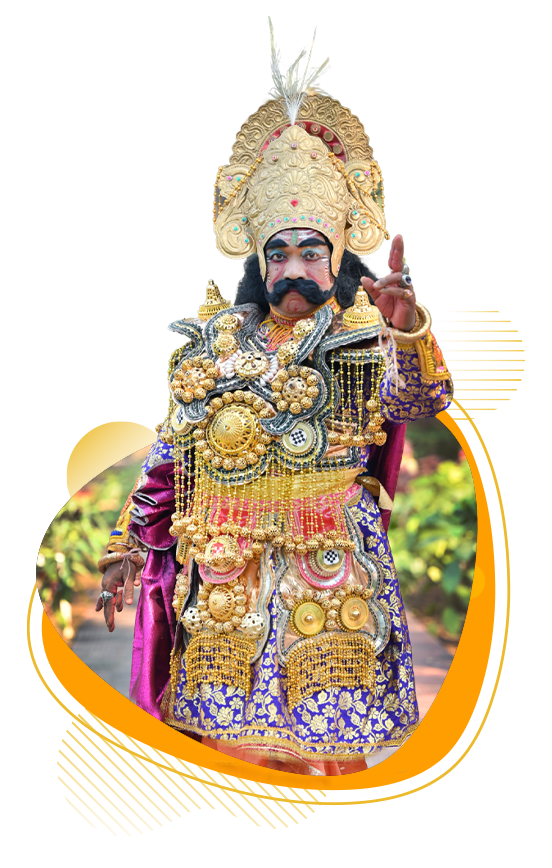
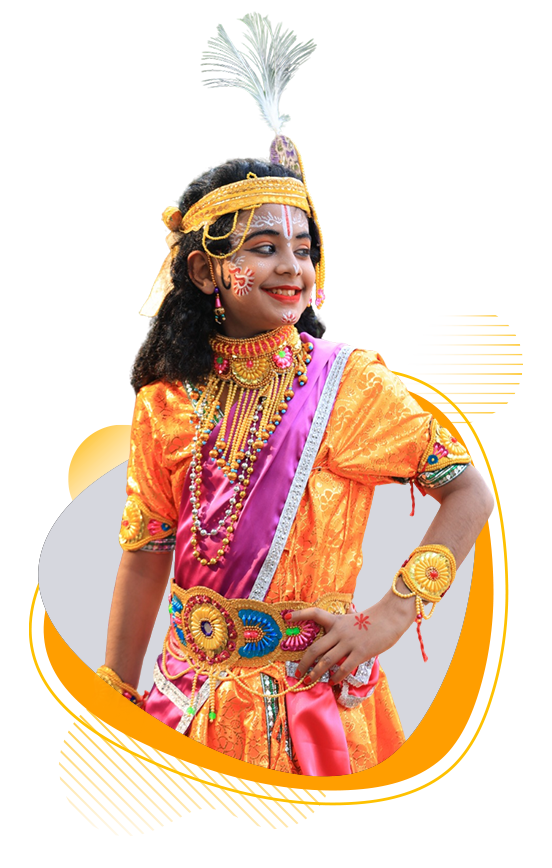
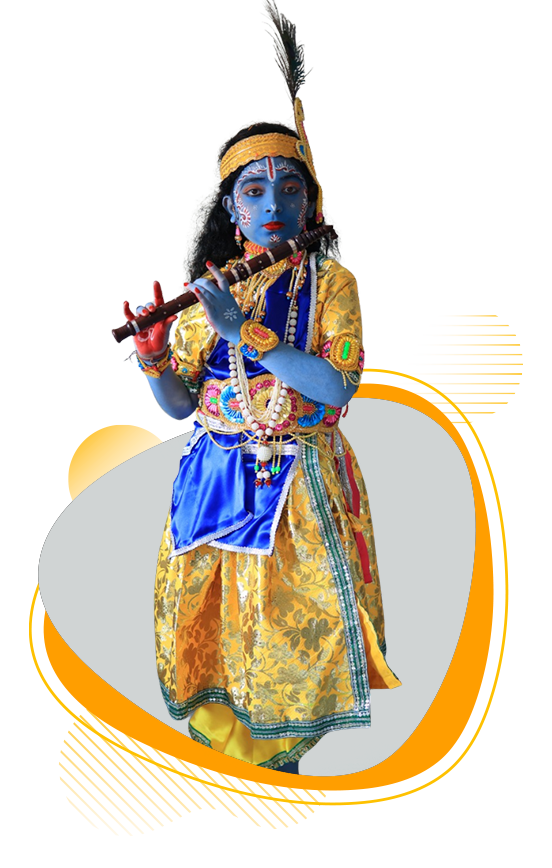
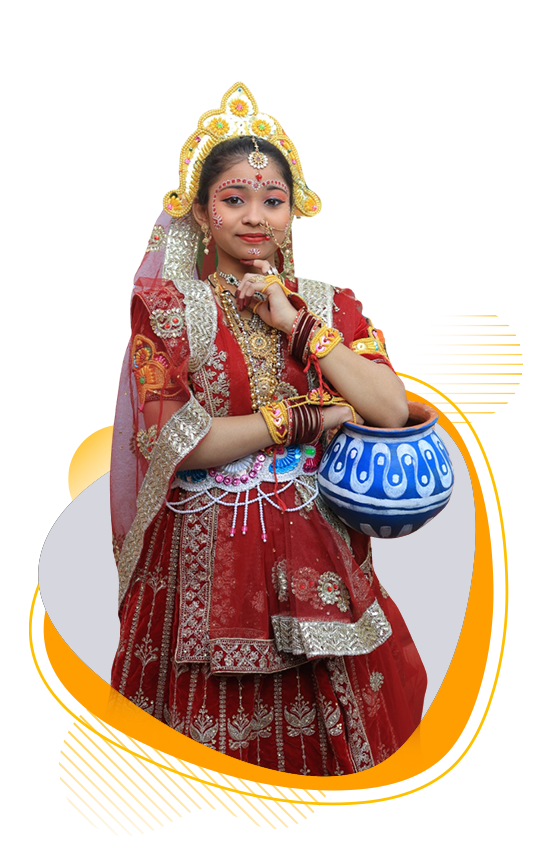
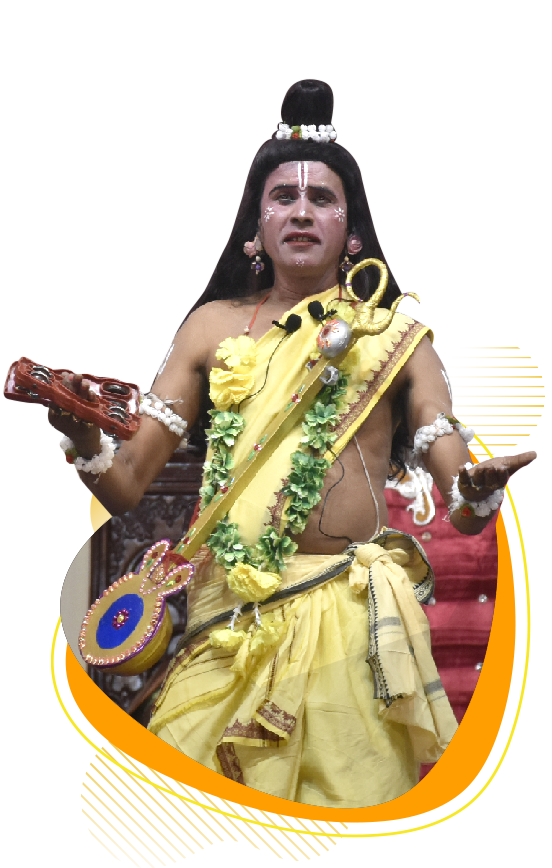
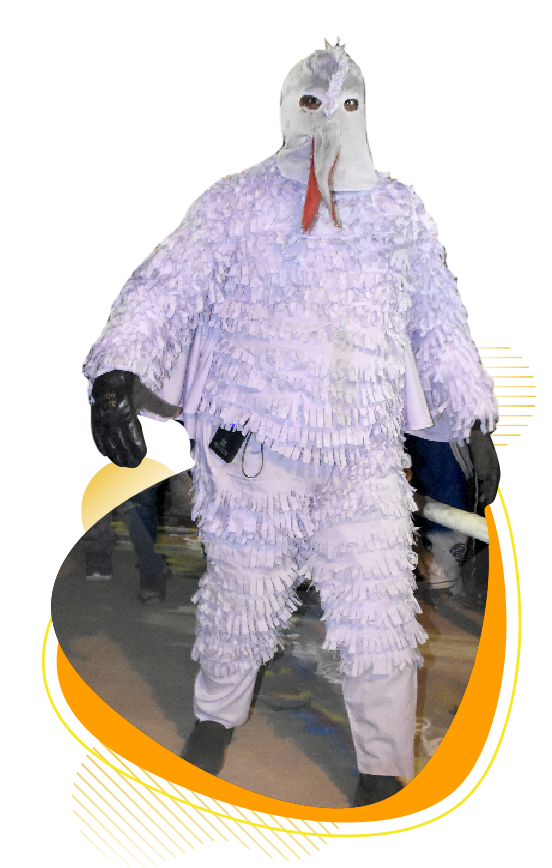
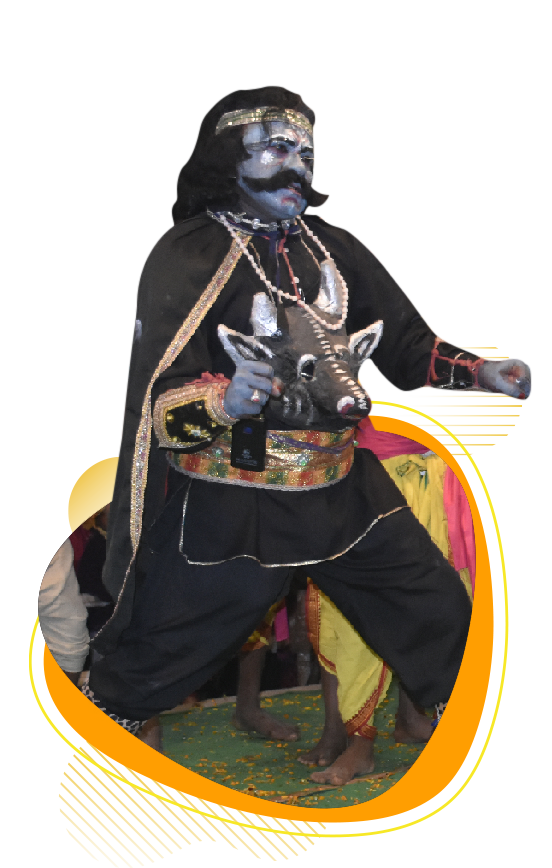
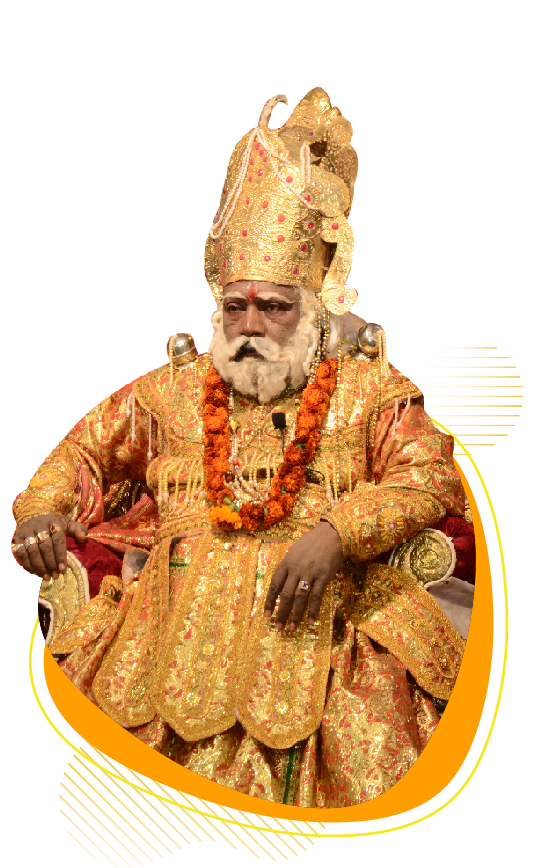
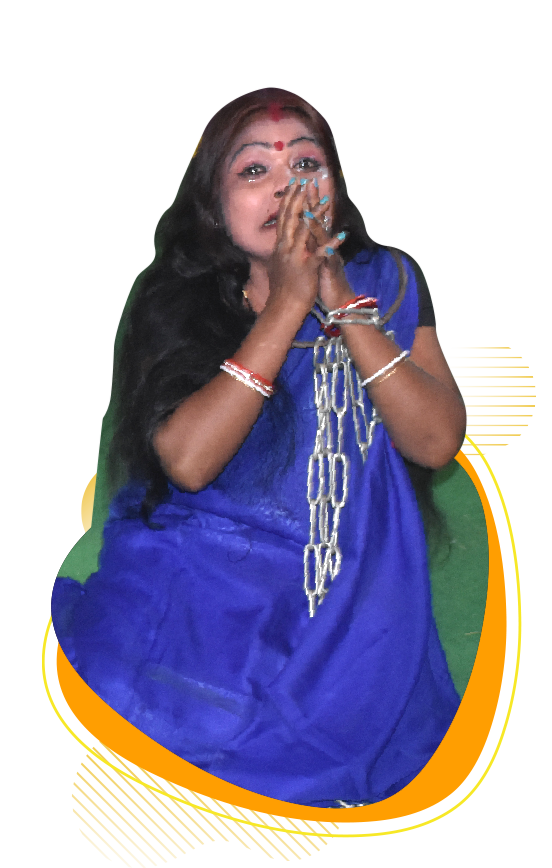
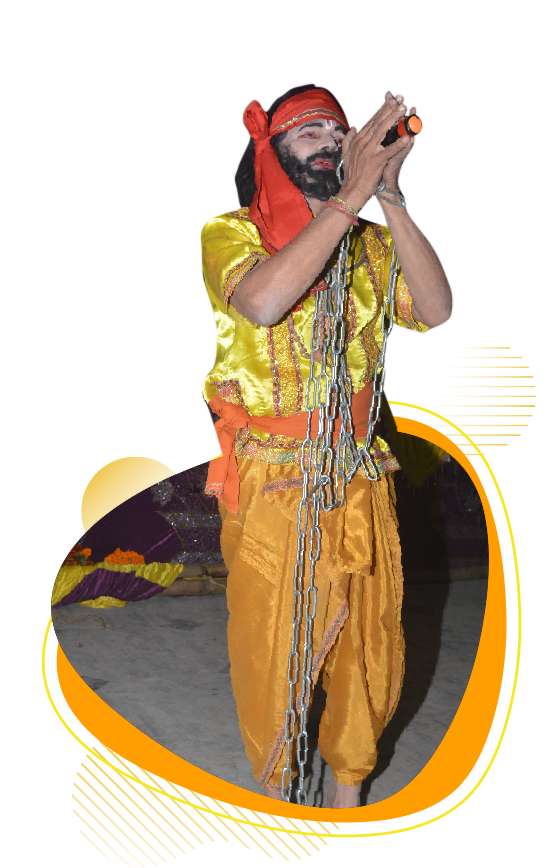
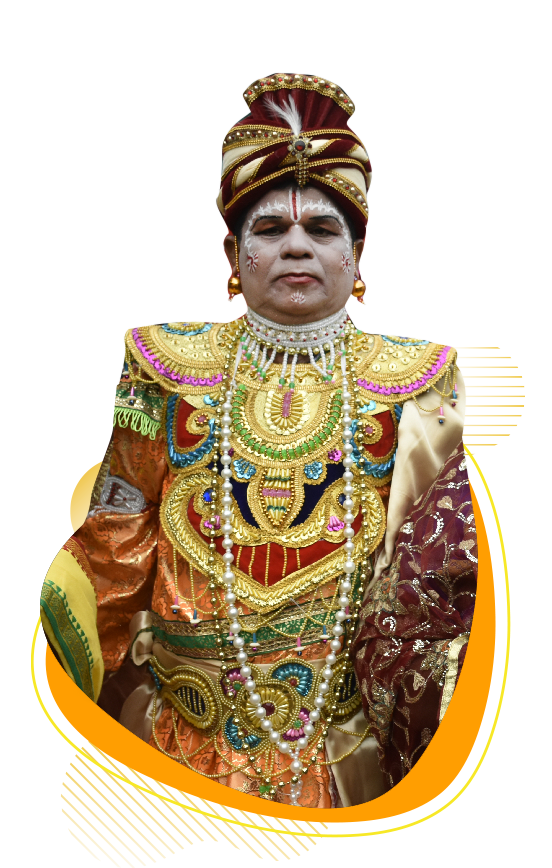
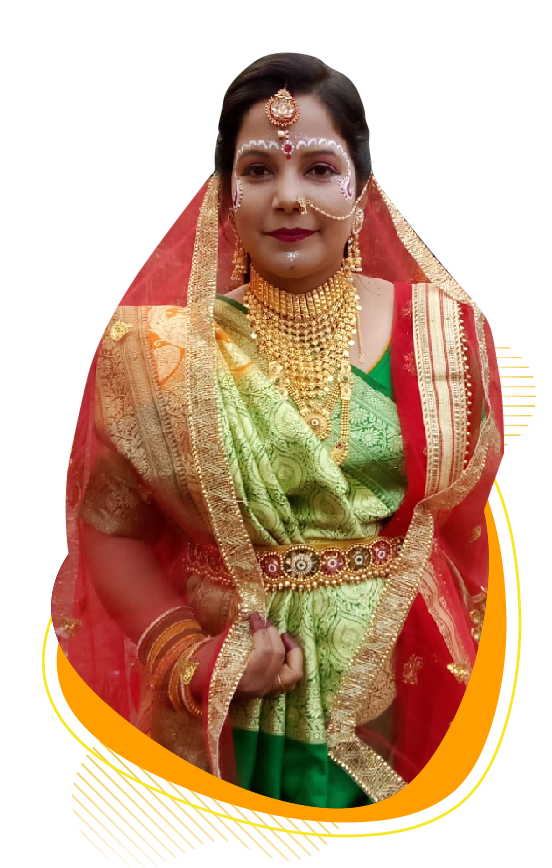
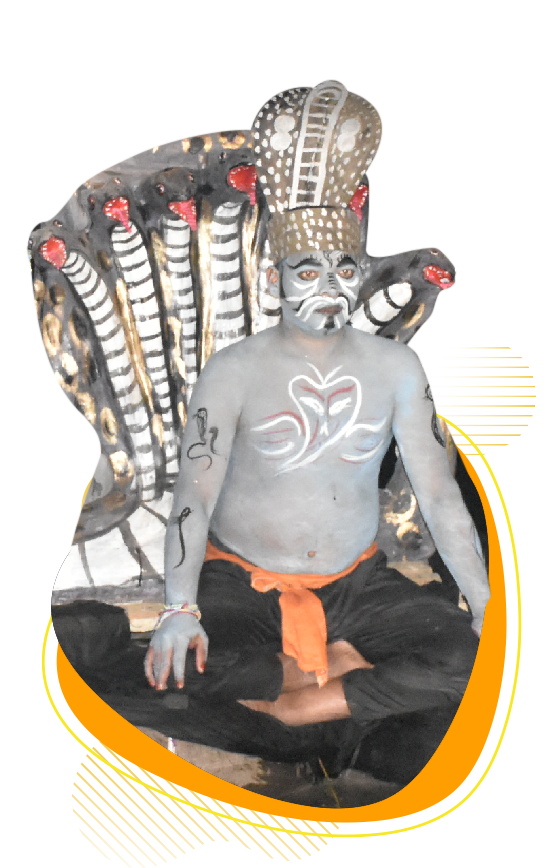
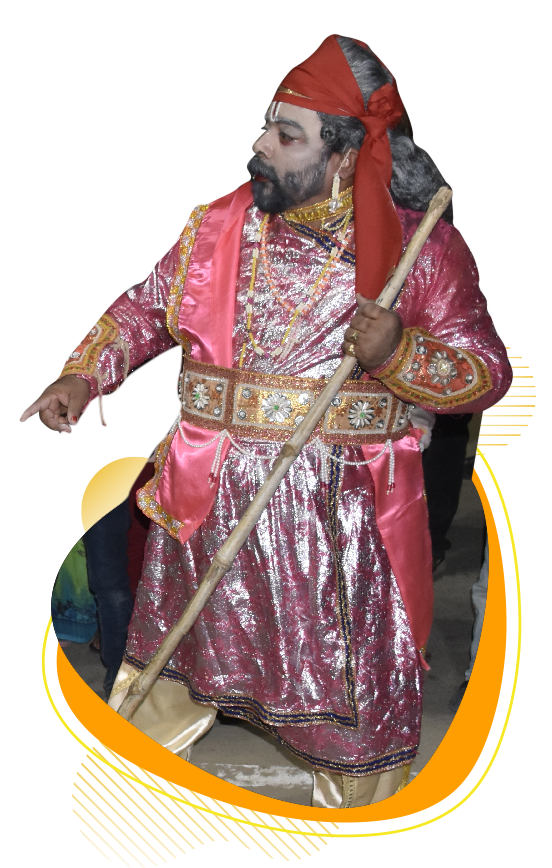

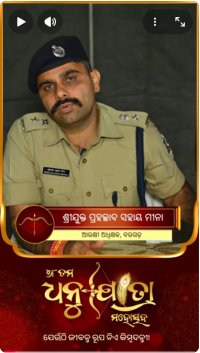
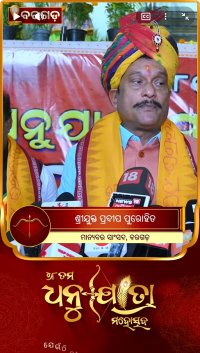
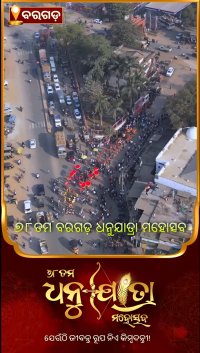
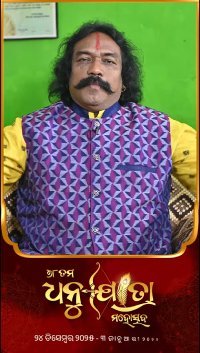
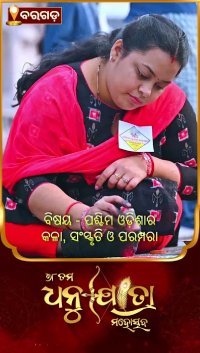
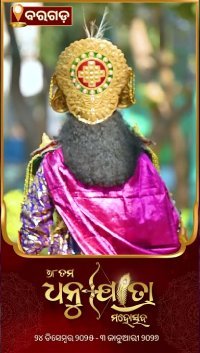
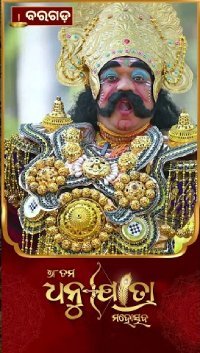
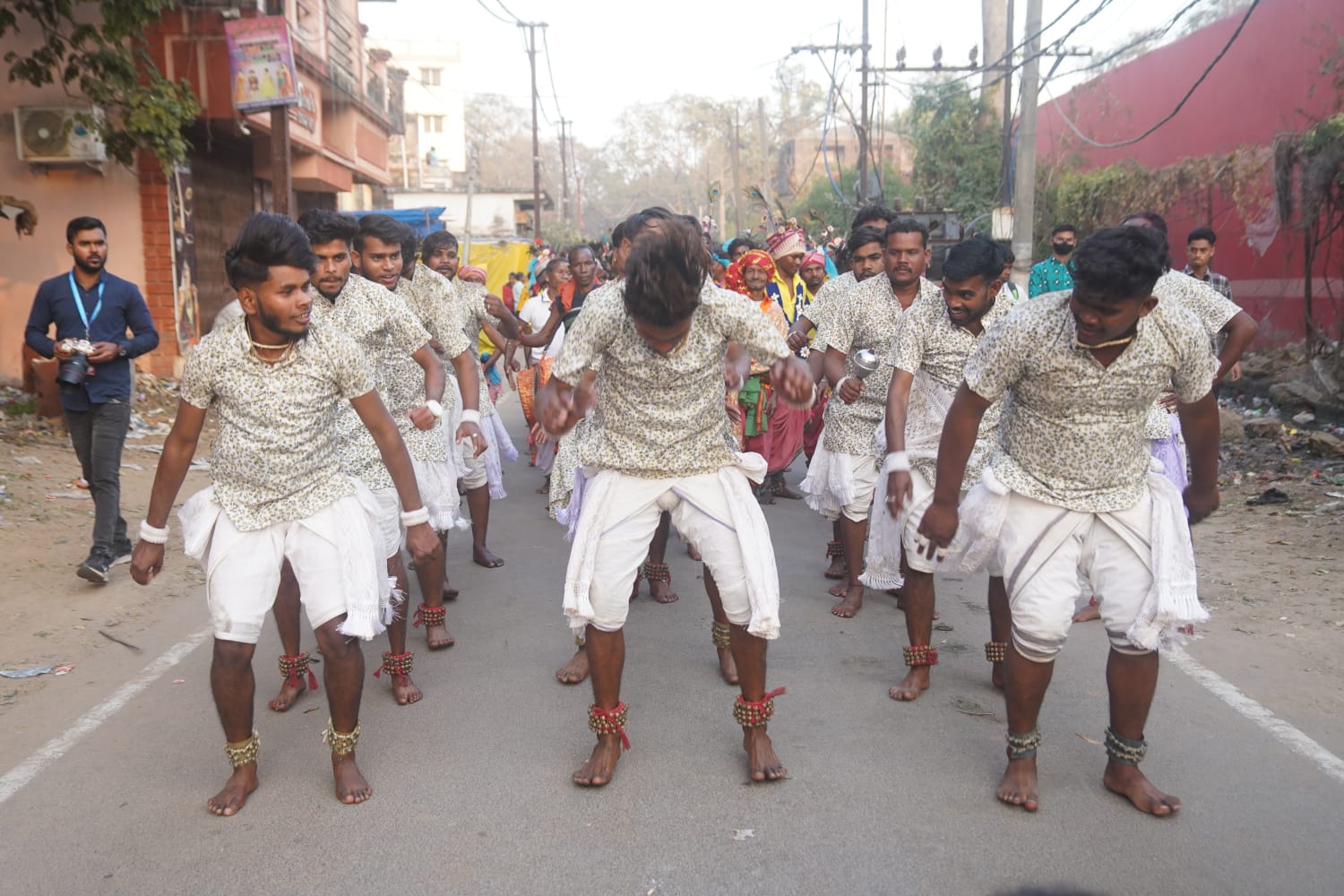
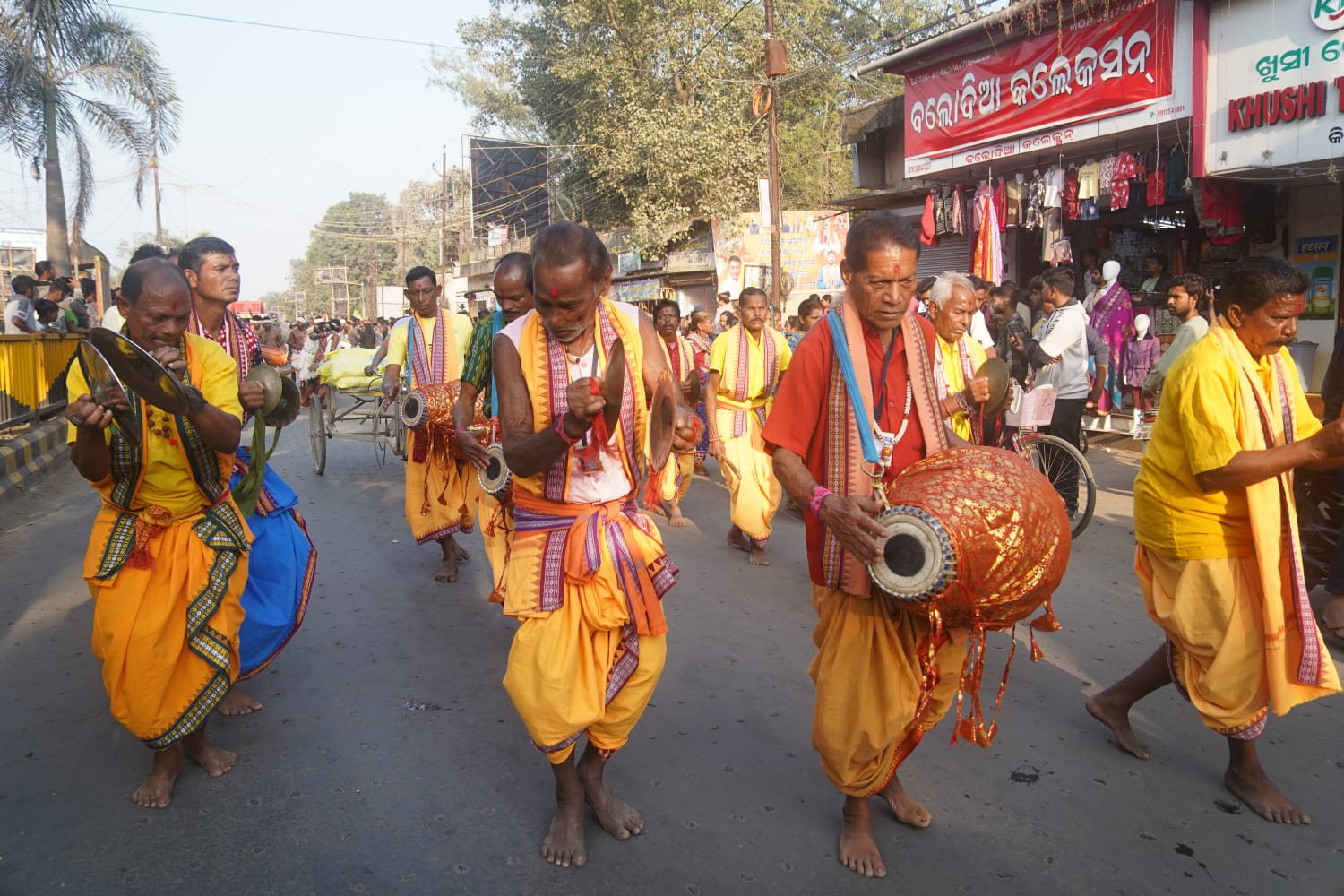
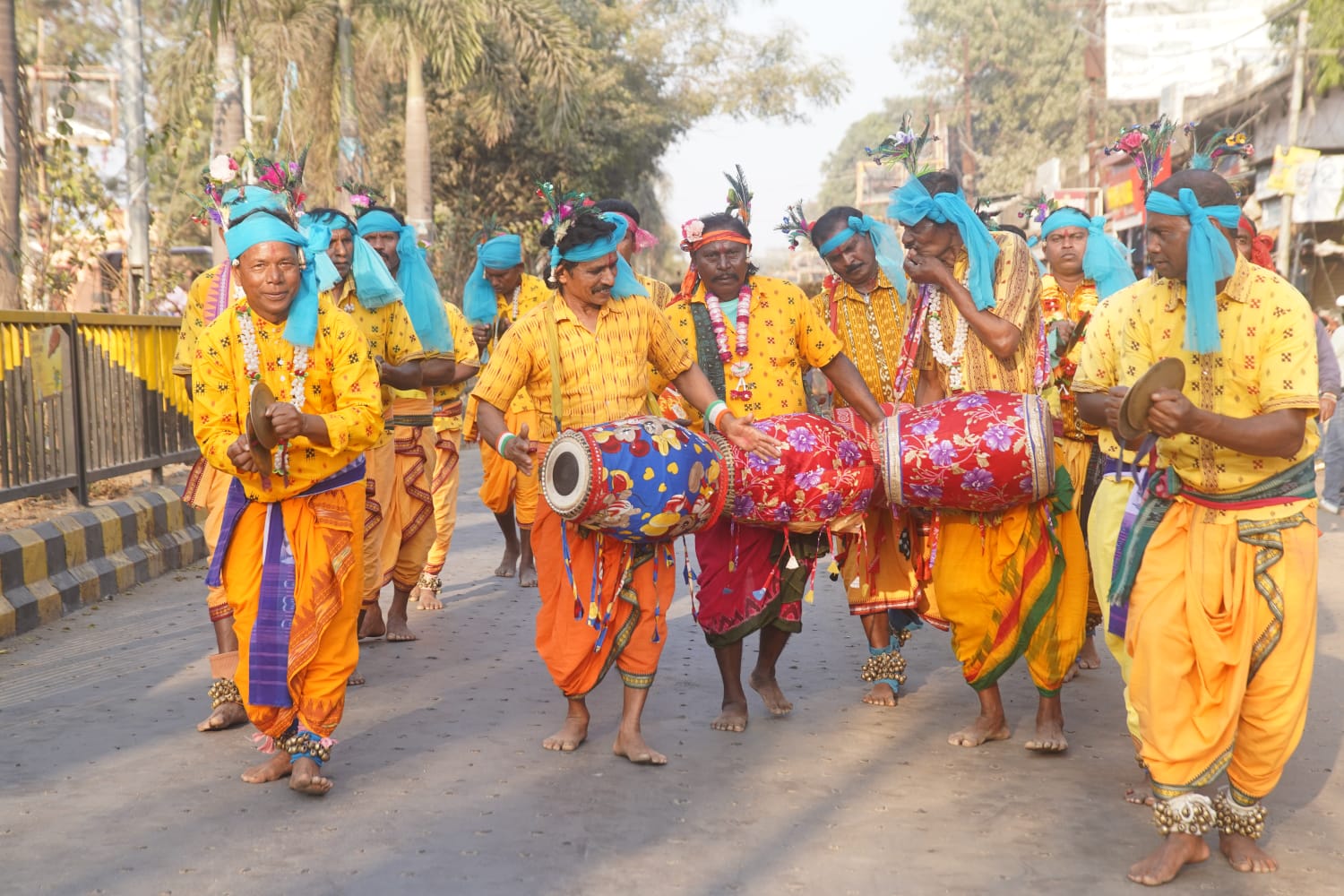
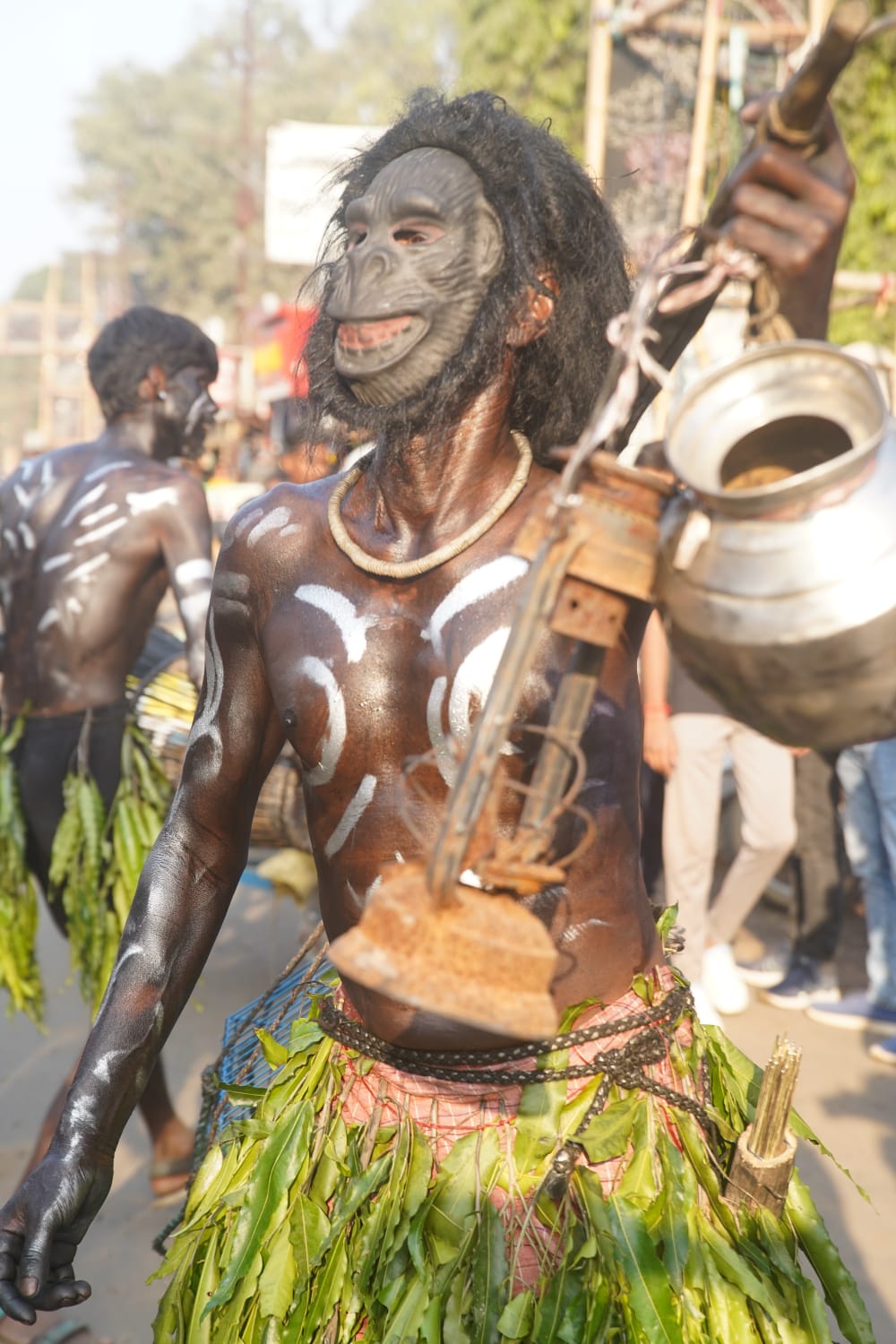
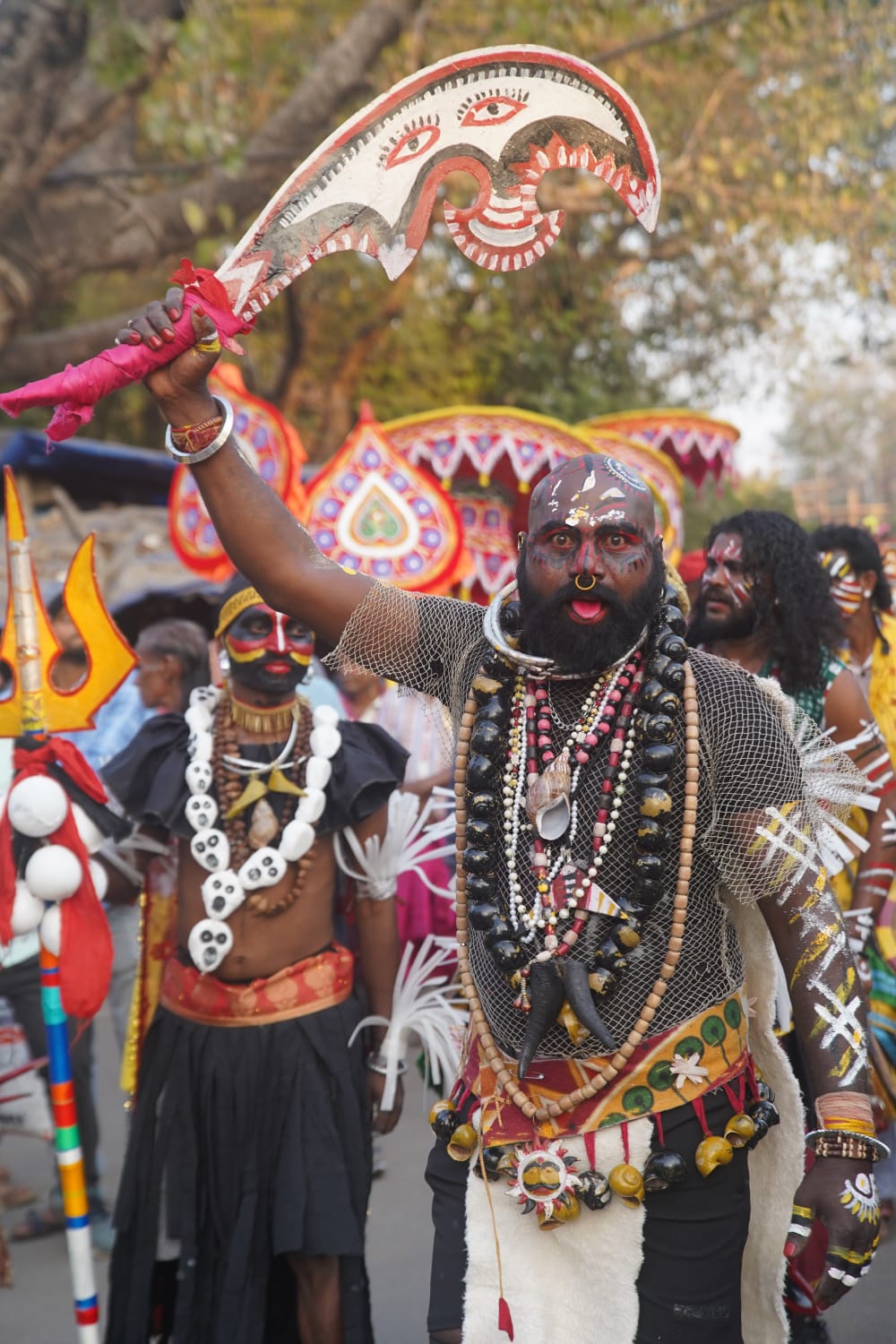
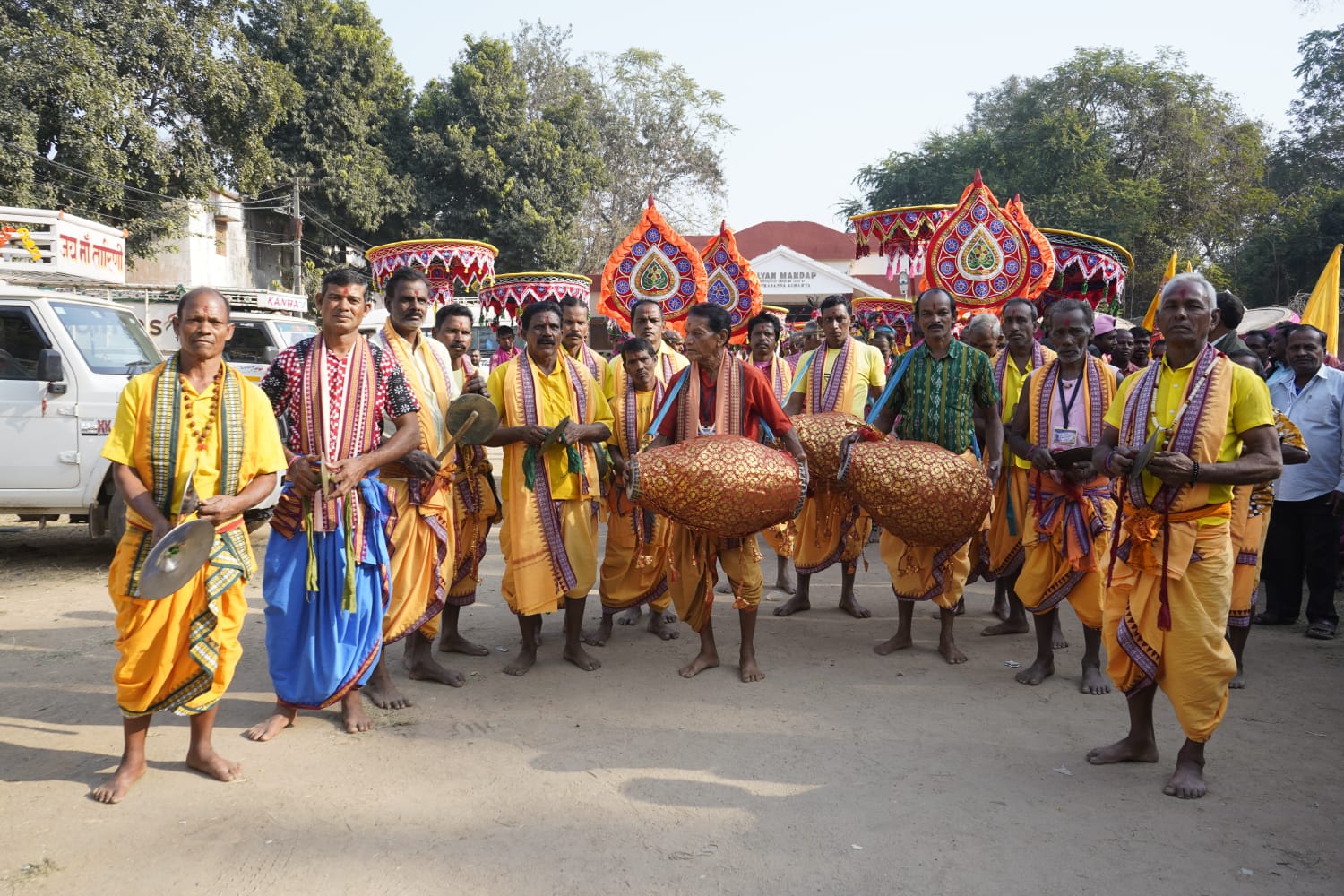
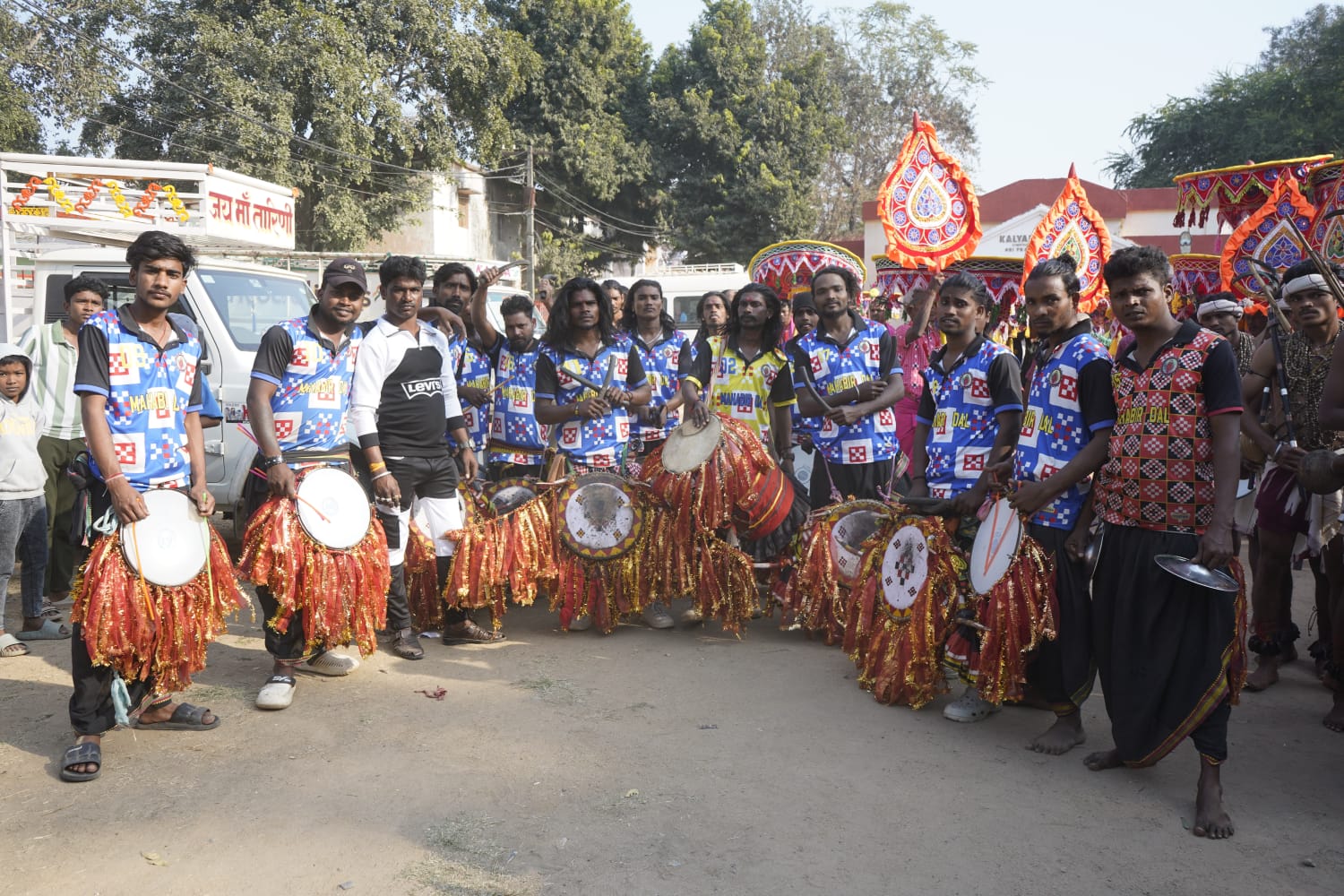
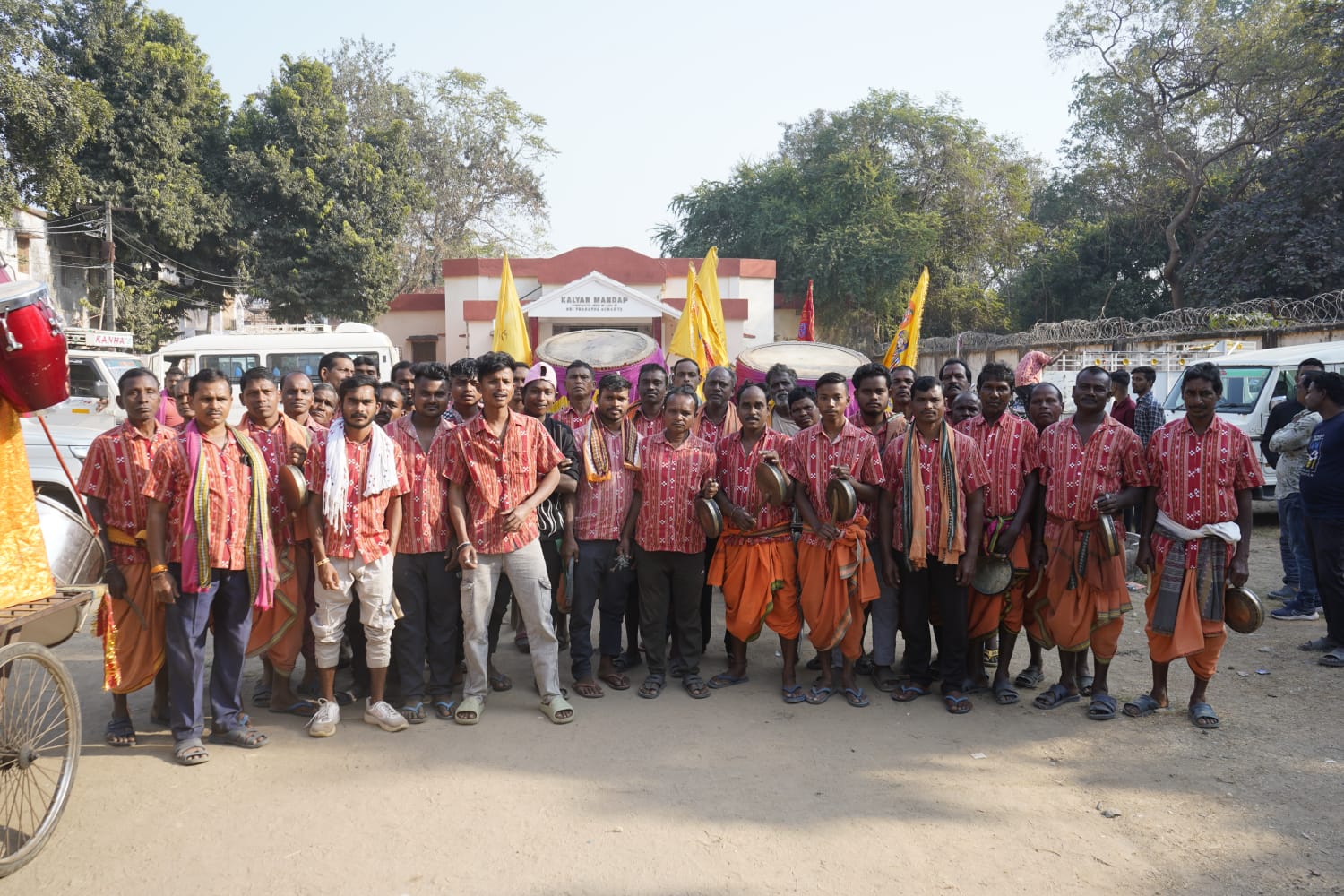
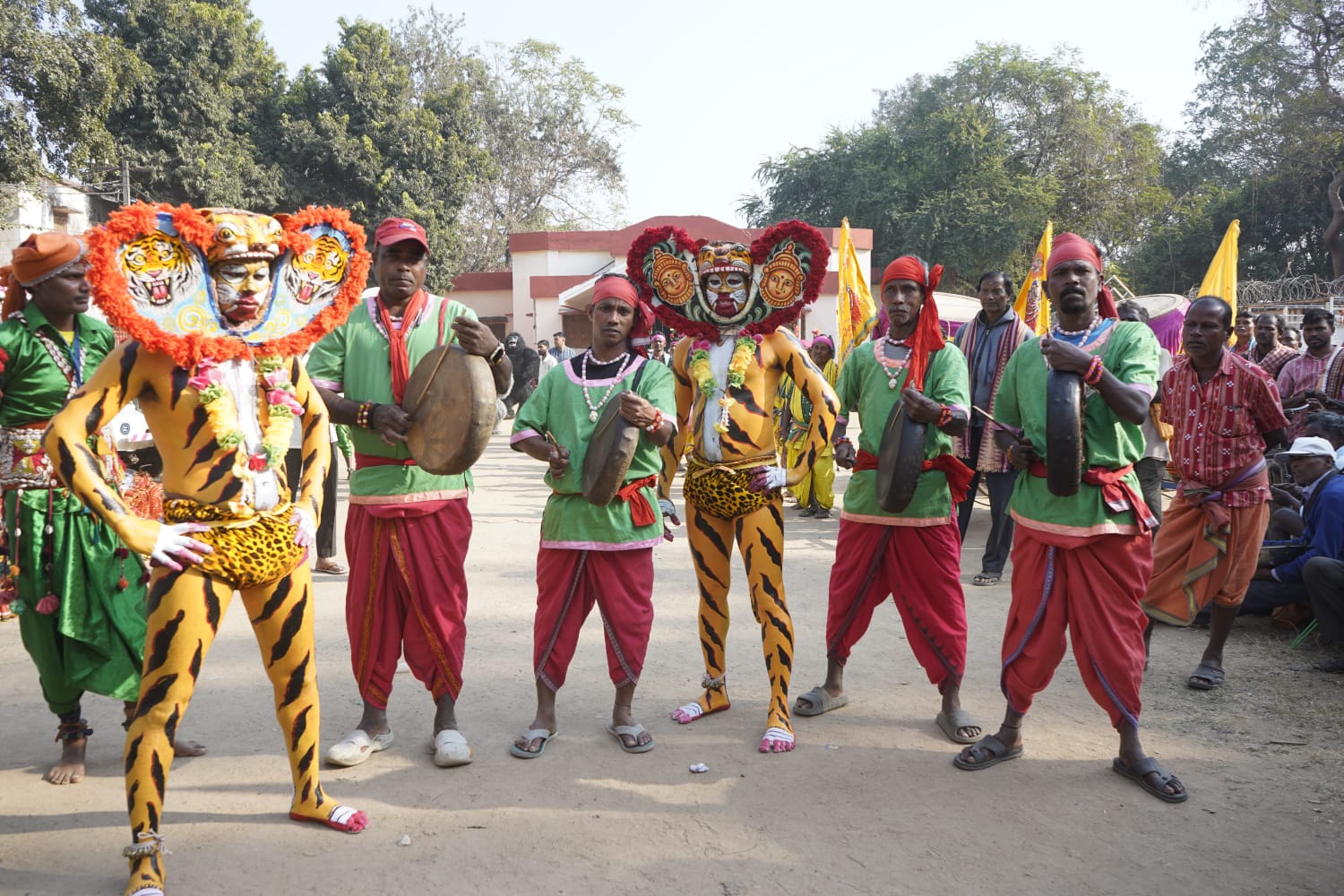
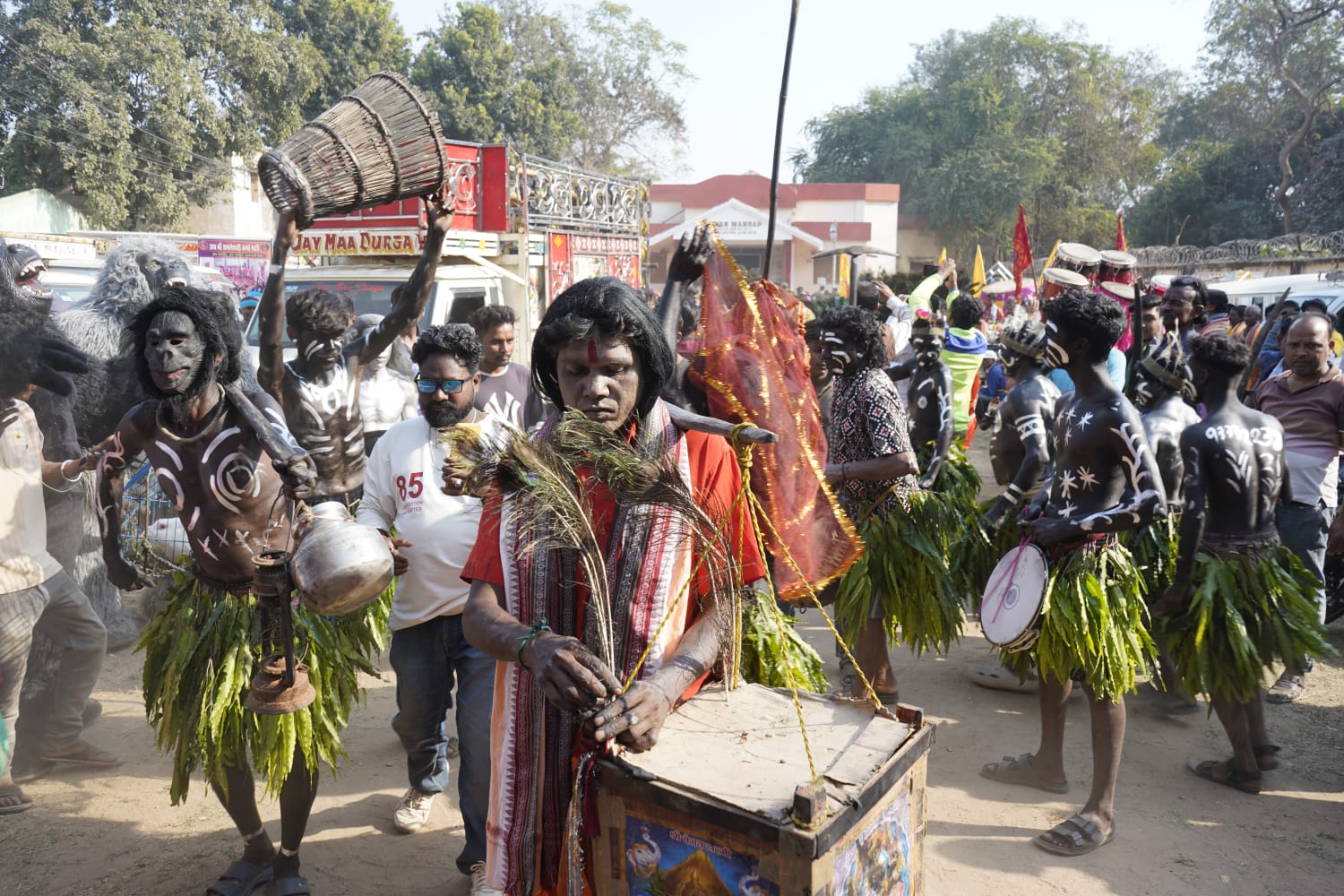
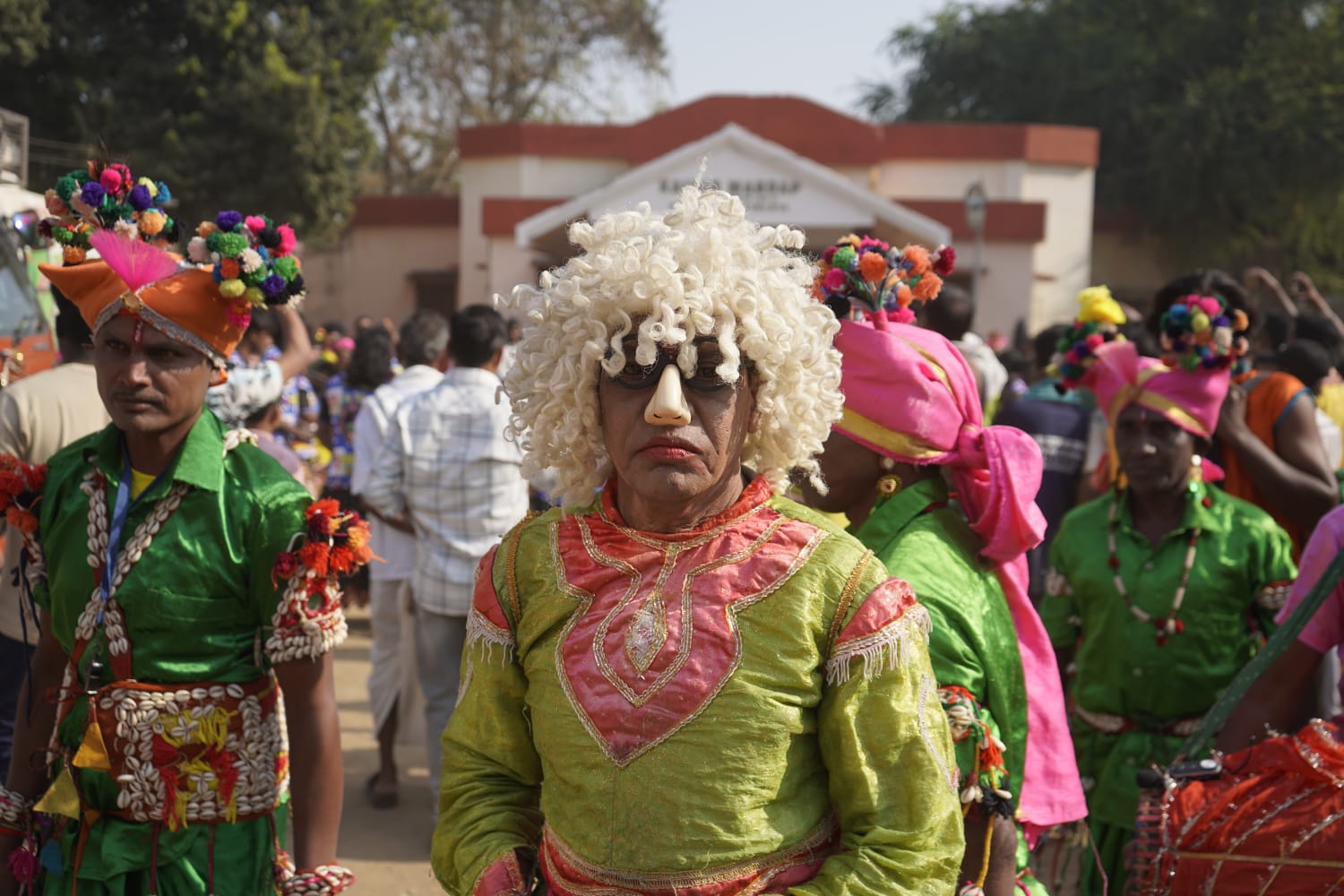
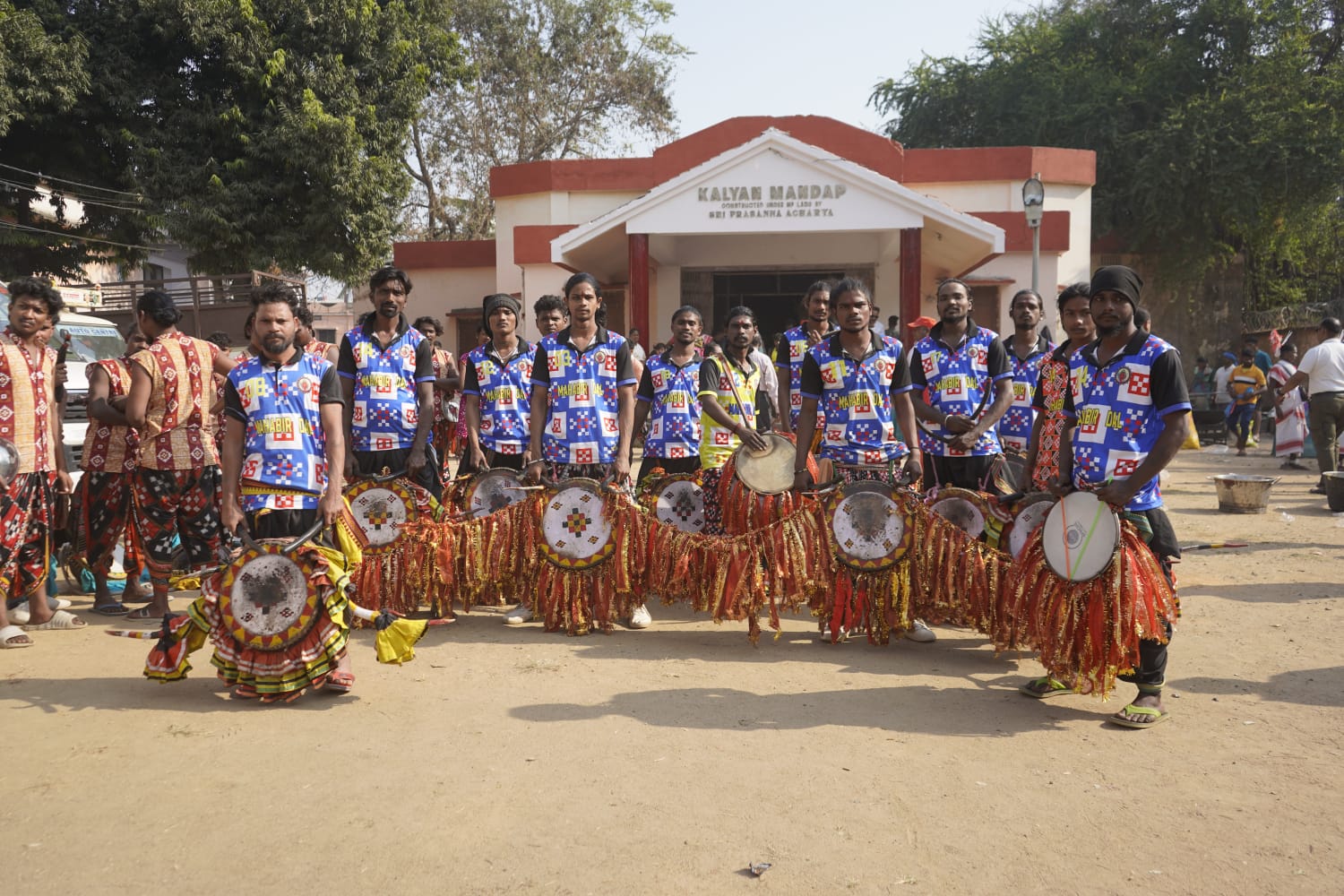
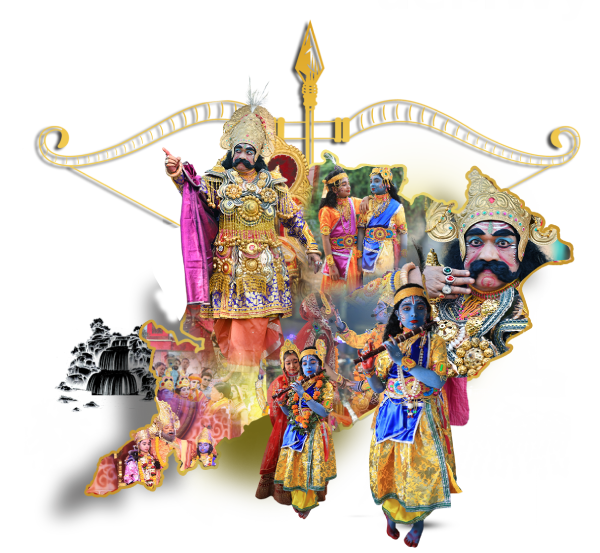
Dhanujatra is a collective and vibrant festival celebrated with grandeur and enthusiasm. The highlight of this festival is its portrayal as a contemporary folk theatre, symbolically representing the rich cultural heritage of India. The origins of this festival lie in post-independence India, reflecting the spirit of freedom and community. Over the years, Dhanujatra has grown to become an iconic representation of collective life and cultural identity.
Every year, the festival is celebrated for 11 days, starting from the auspicious occasion of Paush Purnima. The major attraction of Dhanujatra is the dramatization of the story of Kansa, the tyrant king of Mathura, and his eventual downfall at the hands of Lord Krishna. The town of Bargarh transforms into Mathura, the Jeera River becomes Jamuna, and nearby villages like Amapali represent Gopapura. These geographical elements are intricately woven into the narrative, creating an immersive experience for all participants.
The villages that participate in Dhanujatra are celebrated for their significant roles, such as Gopapura, Kalabikas Gaon, and Andharaban Gaon. The festival showcases a unique blend of traditional storytelling and modern theatrical elements, making it an iconic event in Odisha’s cultural calendar.
Post-independence, Dhanujatra emerged as a symbolic platform for collective expression, allowing people to celebrate their heritage and unite as a community. The scenes presented during the Jatra emphasize moral and cultural values, making it a significant event that highlights India’s cultural legacy.
This festival holds immense importance in fostering communal harmony and celebrating cultural pride. Through Dhanujatra, the grandeur of India's traditions and its timeless values are showcased to the world.
ଧନୁଯାତ୍ରାର ଉତ୍ପତ୍ତି ଏକ ସାମଗ୍ରିକ ଚେତନାରୁ ଉଦବୁଦ୍ଧ ଓ ପରିପୃଷ୍ଠ । ଏହି ମହୋତ୍ସବର ମୂଳ ଧାରା ସମୟ ସହ ସାଧାରଣ ଲୋକମାନଙ୍କ ସାହାଯ୍ୟ ତଥା ସ୍ଵତଃସ୍ପୂର୍ଣ୍ଣ ଚେଷ୍ଟାରେ ବିକଶିତ ହୋଇଛି । ଭାରତବର୍ଷର ସ୍ଵାଧୀନତା ପ୍ରାପ୍ତିକୁ ଉତ୍ସବ ରୂପ ଦେବା ପାଇଁ ଏହି ଉତ୍ସବ ଆରମ୍ଭ ହୋଇ ସ୍ଵାଧୀନ ଭାରତର ଏକତା ଏବଂ ସାଂସ୍କୃତିକ ବିଭବକୁ ପରିପୁଷ୍ଟ କରିଆସୁଛି।
ପ୍ରତିବର୍ଷ ପୌଷ ଶୁକ୍ଳ ପଞ୍ଚମୀ ତିଥିରୁ ପୂର୍ଣ୍ଣିମା ପର୍ଯ୍ୟନ୍ତ ଅନୁଷ୍ଠିତ ହେଉଥିବା ବିରାଟ ଧନୁଯାତ୍ରା ମହୋତ୍ସବ ଏହି ବିକାଶୋନ୍ମୁଖୀ ସହରକୁ ଏକ ଭିନ୍ନ ପରିଚୟ ଦେଇଥାଏ । ବିଶ୍ବର ବୃହତ୍ ଖୋଲା ରଙ୍ଗମଞ୍ଚ ଭାବରେ ଆଦୃତ ଏହି ଯାତ୍ରା ସାଧାରଣତଃ ଇଂରାଜୀ କ୍ୟାଲେଣ୍ଡର ଡିସେମ୍ବର ଜାନୁୟାରୀ ମାସ ମଧ୍ୟରେ ଅନୁଷ୍ଠିତ ହୋଇଥାଏ। ଭାରତର ଅନ୍ୟ କୌଣସି ସ୍ଥାନରେ କ୍ଵଚିତ୍ ଏପରି ଏକ ବିଶାଳ ମହୋତ୍ସବ ପାଳିତ ହେଉଥିବାର ଦେଖାଯାଏ। ଏହି ମହୋତ୍ସବ ପାଳନର ସ୍ଥାନ ଓ ଅବଧି ନିଶ୍ଚିତ ଭାବରେ ଅତୁଳନୀୟ ଅଟେ। ଏହି ମହୋତ୍ସବର ଶାସ୍ତ୍ରୀୟ ନୃତ୍ୟ, ଲୋକନୃତ୍ୟ, ସଙ୍ଗୀତ, ନାଟ୍ୟ କଳାର ପରମ୍ପରାକୁ ବଜାୟ ରଖିବାରେ ଅନନ୍ୟ ଅବଦାନ ରହିଛି
ପ୍ରାୟ ପନ୍ଦର କିଲୋମିଟର ପରିସୀମା ମଧ୍ୟରେ ଦୀର୍ଘ ଏଗାର ଦିନ ବ୍ୟାପୀ ପାଳିତ ହେଉଥିବା ଏହି ଉତ୍ସବରେ ସମଗ୍ର ବରଗଡ଼ ସହର ପୌରାଣିକ ସହର ମଥୁରା ଓ ନିକଟସ୍ଥ ଅମ୍ବାପାଲି ଗ୍ରାମ ଗୋପପୁରରେ ରୂପାନ୍ତରିତ ହୋଇଯାଆନ୍ତି। ଏହି ଉତ୍ସବ ଜନସମୁହର ଭାବପ୍ରବଣତା ଓ ଭକ୍ତିଭାବର ଅପୂର୍ବ ସଙ୍ଗମର ନିଦର୍ଶନ ଅଟେ । "ଧନୁ" ଉପରେ ପର୍ଯ୍ୟବେଶିତ ଥିବାରୁ ଏହି ଉତ୍ସବ ଧନୁଯାତ୍ରା ନାମରେ ଅଭିହିତ। ଧନୁ କେବଳ ଯୋଦ୍ଧାର ଅସ୍ତ୍ର ମାତ୍ର ନୁହେଁ ଏହା ବୀର ପୁରୁଷର ଶୌର୍ଯ୍ୟକୁ ମଧ୍ୟ ସୂଚିତ କରେ
King Kansa’s reign. City Tour. Atrocities against sages and ascetics. Putting Devaki & vasudev behind bars and killing their new born one after another.
ମହାରାଜା କଂସଙ୍କ ରାଜତ୍ଵ। ନଗର ପରିକ୍ରମା। ମୁନି ଋଷି ମାନଙ୍କ ଉପରେ ଅତ୍ୟାଚାର। ଦେବକୀ ବସୁଦେବଙ୍କୁ କରାଗାରରେ ବନ୍ଦୀ କରି ଗୋଟିଏ ପରେ ଗୋଟିଏ ନବଜାତ ଶିଶୁଙ୍କୁ ହତ୍ୟା।
The administrative activities of King Kansa. After dethroning his father, Ugrasena, ascending to the throne. Consultation with ministers, hosting invited guests, punishing the guilty, and keeping track of the good and bad news of Mathura city.
ମହାରାଜା କଂସଙ୍କ ରାଜ୍ୟ କାର୍ଯ୍ୟ। ପିତା ଉଗ୍ରସେନଙ୍କୁ ଗାଦିଚ୍ୟୁତ କରି ସିଂହାସନ ଆରୋହଣ। ପାତ୍ର ମନ୍ତ୍ରୀଙ୍କ ସହ ମନ୍ତ୍ରଣା। ନିମନ୍ତ୍ରିତ ଅତିଥି ମାନଙ୍କୁ ଆତିଥ୍ୟ ପ୍ରଦାନ। ଦୋଷୀଙ୍କୁ ଦଣ୍ଡ। ମଥୁରା ନଗରୀର ଭଲ ମନ୍ଦ ଖବରର ତଦାରଖ।
Arrangements for dance and music performances by invited dance troupes for King Kansa's entertainment. A space where local folk artists from tributary states could blend into the dances and songs, losing themselves in the company of liquor and camaraderie.
ମହାରାଜା କଂସଙ୍କ ମନୋରଞ୍ଜନ ପାଇଁ ନିମନ୍ତ୍ରିତ ନୃତ୍ୟ ଦଳଙ୍କ ନୃତ୍ୟ ଗୀତର ଆୟୋଜନ। କରଦ ରାଜ୍ୟର ଲୋକନୃତ୍ୟ କଳାକାର ମାନଙ୍କ ସହ ନାଚଗୀତ ରେ ମସଗୁଲ ହୋଇ ସୁରା ସାଖି ରେ ନିଜକୁ ହଜେଇ ଦେବାର ସ୍ଥାନ।
The prominent goddess temples of Bargarh city, where Diwali and Kali Puja are celebrated annually with devotion and grandeur in a grand ceremony.
ବରଗଡ଼ ସହର ର ପ୍ରମୁଖ ଦେବୀ ମନ୍ଦିର, ପ୍ରତିବର୍ଷ ଦୀପାବଳୀ ଓ କାଳୀ ପୂଜା ଶ୍ରଦ୍ଧା ଓ ଭକ୍ତି ର ସହ ମହା ସମାରୋହ ରେ ପାଳନ କରା ଯାଏ।
Hearing the prophecy, King Kansa imprisoned Devaki and Vasudeva in this jail. Here, the scenes of Devaki's children being killed were enacted.
ଶୂନ୍ୟବାଣୀ ଶୁଣି ଦେବକୀ ବସୁଦେବଙ୍କୁ ବନ୍ଦୀ କରି ଏହି କାରାଗାର ରେ ନିକ୍ଷେପ କରନ୍ତି ମହାରାଜା କଂସ। ଏହିଠାରେ ଦେବକୀର ଶିଶୁ ମାନଙ୍କୁ ହତ୍ୟାର ଦୃଶ୍ୟ ଅଭିନୀତ ହୁଏ।
The Adimata Temple of Khajura Tikra is popularly known as Madhuban Tota. Here, Sri Krishna and Balaram, on their journey from Gopapura to Mathura, would spend the night resting. Adimata would prepare and serve them delicious meals, including rice dishes, khichdi, pithas, and other delicacies.
ଖଜୁରଟିକ୍ରାର ଆଦିମାତା ମନ୍ଦିର ମଧୁବନ ତୋଟା ନାମରେ ନାମିତ। ଏଠାରେ କୃଷ୍ଣ ବଳରାମ ଗୋପପୁରରୁ ମଥୁରା ଆସି ରାତ୍ରୀ ଯାପନ କରି ବିଶ୍ରାମ ନିଅନ୍ତି। ଆଦିମାତା କୃଷ୍ଣ ବଳରାମଙ୍କୁ ଅନ୍ନ ଭୋଜନ, ଖେଚୁଡ଼ି, ପିଠା ପ୍ରଭୃତି ସ୍ବାଦିଷ୍ଟ ଖାଦ୍ୟ ପ୍ରସ୍ତୁତିକରି ଖାଇବାକୁ ଦିଅନ୍ତି।
Radha Madhava Bhagavat Tungi located at Govindpali transforms into a hermitage where muni-rishi worship. The muni-rishi, while drinking the nectar of Sri Krishna's name, travel with King Kansa’s soldiers, narrating his oppressive and cruel deeds.
ଗୋବିନ୍ଦପାଲି ସ୍ଥିତ ରାଧାମାଧାବ ଭାଗବତ ଟୁଙ୍ଗୀଟି ମୁନି ଋଷି ମାନଙ୍କ ଆଶ୍ରମରେ ପରିଣତ ହୋଇ ମୁନି ଋଷିଙ୍କ ଆରାଧନାର ସ୍ଥଳୀ ପାଲଟେ। ମୁନି ଋଷି ମାନେ କୃଷ୍ଣ ନାମାମୃତ ପାନ କଲାବେଳେ ସୈନ୍ୟ ସାମନ୍ତଙ୍କ ସହିତ ମହାରାଜା କଂସ ପହଞ୍ଚି ସେମାନଙ୍କ ଉପରେ ଅକଥନୀୟ ଅତ୍ୟାଚାର କରନ୍ତି।
Here, King Kansa worships Lord Shiva to seek blessings and perform rudrabhishek to please him.
ଏଠି ମହାରାଜା କଂସ ଙ୍କ ଆରାଧ୍ୟ ଦେବତା ଶିବ ଙ୍କୁ ସନ୍ତୋଷ କରିବା ପାଇଁ ରୁଦ୍ରାଭିସେକ କରନ୍ତି
Meeting of Sudama Mali with Krishna Balaram.
ସୁଦାମା ମାଳି ଙ୍କ ସହିତ କୃଷ୍ଣ ବଳରାମ ଙ୍କ ସାକ୍ଷାତ
Jamuna River, a river located between Gopapura and Mathura, holds significant importance in the childhood of Lord Krishna, as many pivotal events occurred here. During the Bargarh Dhanu Yatra, the Jira River is symbolically regarded as the Jamuna River.
ଯମୁନା ନଦୀ, ଗୋପପୁର ଓ ମଥୁରା ମଧ୍ୟ ରେ ଥିବା ଏକ ନଦୀ। ପ୍ରଭୁ ଶ୍ରୀ କୃଷ୍ଣ ଙ୍କ ବାଲ୍ୟ କାଳ ର ବହୁତ୍ ଗୁରୁତ୍ଵପୂର୍ଣ୍ଣ ଘଟଣା ଏଇ ଠାରେ ଘଟିଛି। ବରଗଡ଼ ଧନୁଯାତ୍ରା ରେ ଜିରା ନଦୀ କୁ ଯମୁନା ନଦୀ ବୋଲି ମାନ୍ୟତା ମିଳିଛି
All childhood pastimes of Shri Krishna, including the playful mischiefs with the Gopis , the killing of Shankhachuda, the slaying of Kamsa’s six demons (Shadhamalla), stealing clothes in the Jamuna River (Vastra Harana), Akrura witnessing Krishna’s footprints in the Jamuna, Nanda Utsav, and many more.
ଶ୍ରୀକୃଷ୍ଣଙ୍କ ସମସ୍ତ ବାଲ୍ୟଲୀଳା, ଗୋପୀଙ୍କ ଦଧିବିକା, ଶଙ୍ଖଚୁଡ ବଦ୍ଧ, କଂସଙ୍କ ଷଢମଲ୍ଲ ବଦ୍ଧ, ଯମୁନାରେ ବସ୍ତ୍ର ହରଣ , ଅକ୍ରୁର ଯମୁନା ନଦୀରେ ଶ୍ରୀକୃଷ୍ଣଙ୍କ ପଦଚିହ୍ନ ଦର୍ଶନ, ନନ୍ଦ ଉତ୍ସବ ଇତ୍ୟାଦି।
The arrival of Vasudeva, swapping the eighth child of Devaki into Yashoda’s lap, and taking the divine girl (Yogmaya) back to Mathura. Celebrations like Baby Krishna’s Doli Khela (cradle ceremony).
ବସୁଦେବଙ୍କ ପ୍ରବେଶ। ଯଶୋଦା ଙ୍କ କୋଳରେ ଦେବକୀଙ୍କ ଅଷ୍ଟମ ଗର୍ଭର ସନ୍ତାନକୁ ରଖି ବିଜୁଳି କନ୍ୟାକୁ ନେଇ ମଥୁରା ପ୍ରତ୍ୟାବର୍ତ୍ତନ। ବାଳକକୃଷ୍ଣଙ୍କ ଦୋଳି ଖେଳ।
The royal duties of King Nanda, discussions with Queen Yashoda about Gopapura, concerns over Krishna and Balarama’s mischievous activities and their safety, the celebration of Nanda Utsav, and various cultural programs.
ମହାରାଜା ନନ୍ଦଙ୍କ ରାଜକାର୍ଯ୍ୟ, ମହାରାଣୀ ଯଶୋଦା ଙ୍କ ସହ ଗୋପପୁର ସମ୍ପର୍କରେ ଆଲୋଚନା, କୃଷ୍ଣ ବଳରାମଙ୍କ ଚପଳାମି ଓ ସୁରକ୍ଷା ପାଇଁ ଚିନ୍ତା ପ୍ରକଟ , ନନ୍ଦ ଉତ୍ସବ ତଥା ସାଂସ୍କୃତିକ କାର୍ଯ୍ୟକ୍ରମ।
The childhood pastimes (leelas) of Krishna and Balarama, including grazing cattle, playing with the cowherd boys (Gopala Balakas), and the Vastra Harana (stealing of clothes).
କୃଷ୍ଣ ବଳରାମଙ୍କ ବାଲ୍ୟଲୀଳା, ଗୋଚାରଣ, ଗୋପାଳ ବାଳକଙ୍କ ସହ କ୍ରୀଡ଼ା,ବସ୍ତ୍ର ହରଣ
Nalakuber and Manigreev, two powerful demons, turned into gigantic Jamalajun trees. While they were bound in a tangle of ants and ropes, Lord Krishna arrived, broke the two trees, and freed the two demons. This scene is often depicted in images and stories.
ନଳକୁବେର ଓ ମଣିଗ୍ରୀବ ଦୁଇଟି ବିରାଟ ଯାମଳାର୍ଜୁନ ବୃକ୍ଷରେ ପରିଣତ ହୋଇଥିଲେ। ଅଣ୍ଟାରେ ଦଉଡ଼ି ସହ ଉଲୁଖଲ ବନ୍ଧା ହୋଇଥିବା ବେଳେ କୃଷ୍ଣ ଆସି ଦୁଇଟା ଗଛକୁ ଭାଙ୍ଗି ଦେଲେ ଓ ଦୁଇ ରାକ୍ଷସକୁ ମୁକ୍ତ କରିବା ଦୃଶ୍ୟ ଅଭିନୀତ ହୋଇଥାଏ।
Hearing the prophecy, King Kansa imprisons Devaki and Vasudeva in this jail. Here, the scenes of Devaki's children being killed are enacted.
ଶୂନ୍ୟବାଣୀ ଶୁଣି ଦେବକୀ ବସୁଦେବଙ୍କୁ ବନ୍ଦୀ କରି ଏହି କାରାଗାର ରେ ନିକ୍ଷେପ କରନ୍ତି ମହାରାଜା କଂସ। ଏହିଠାରେ ଦେବକୀର ଶିଶୁ ମାନଙ୍କୁ ହତ୍ୟାର ଦୃଶ୍ୟ ଅଭିନୀତ ହୁଏ।
When the Dhanuyatra began in 1947, under the leadership of the late Neelamani Pujari, it was known as the San Bedi. Over time, this Bedi became known as the Gopapur Bedi.
ଯେତେବେଳେ ୧୯୪୭ ମସିହା ରେ ଧନୁଯାତ୍ରା ଆରମ୍ଭ ହେଲା , ସ୍ବର୍ଗତ ନୀଳମଣି ପୂଜାରୀ ଙ୍କ ନେତୃତ୍ୱ ରେ ସାନ ବେଦୀ ନାମ ରେ ପରିଚିତ ଧନୁଯାତ୍ରା ମହୋତ୍ସବ। ସମୟକ୍ରମେ ଏହି ବେଦୀ ଗୋପପୁର ବେଦୀ ନାମ ରେ ପରିଚିତ ହେଲା
This is a beautiful scene. In Krishna's pastimes, the scene where Radha crosses the river on Krishna's boat is known as Navakeli. When Radha goes to sell curd in Mathura, Krishna, through his divine play, creates a path for Radha to cross. During this time, he sings a song while leaving the path, and god, upon hearing his words, sits with him in the boat. Together, they cross the Jamuna River.
ଏହା ଏକ ସୁନ୍ଦର ଦୃଶ୍ୟ। କୃଷ୍ଣ ଙ୍କ ଲୀଳା ରେ ରାଧା କୃଷ୍ଣ ଙ୍କ ଡଙ୍ଗା ରେ ପାରିହେବା ଦୃଶ୍ୟ ହେଉଛି ନାବକେଳି । ଯେତେବେଳେ ରାଧା ଦହି ବିକି ଯାଇଥାନ୍ତି ମଥୁରା କୁ ସେତେବେଳେ କୃଷ୍ଣ ଲୀଳା କରି ରାଧା ଙ୍କୁ ବାଟ ବଣାଇଥାନ୍ତି ଏବଂ ଏହି ସମୟ ରେ ସେ ବାଟ ଛାଡ଼ ଗୀତ ଗାଇ ଠାକୁର ଙ୍କୁ ନେହୁରା ହେଇଥାନ୍ତି ଏବଂ ଠାକୁର ତାଙ୍କ କଥା ଶୁଣି ଦୁଇ ଜଣ ଡଙ୍ଗା ରେ ବସି ଯମୁନା କୁ ପାରି ହୋଇଥାନ୍ତି।
The final scene of Gopapura takes place at the main square of Ambapali. When Krishna and Balarama are about to bid farewell with Akroora, Mother Yashoda, along with the gopis, tries to stop them from leaving, pleading with Akroora not to take Krishna and Balarama away. The emotional farewell moment deeply touches the hearts of the spectators, filling their eyes with tears.
ଗୋପପୁରର ଶେଷ ଦୃଶ୍ୟ ଅମ୍ବାପାଲିର ମୁଖ୍ୟ ଛକରେ ମଞ୍ଚସ୍ଥ ହୋଇଥାଏ। ଅକ୍ରୁର ଙ୍କ ସହିତ କୃଷ୍ଣ ବଳରାମ ବିଦାୟ ନେବା ବେଳେ ମାତା ଯଶୋଦା , ଗୋପୀଙ୍କ ସହ ଗୋପାଳ ବାଳକ, ମଧୁମଙ୍ଗଳ ପ୍ରଭୃତି ଅକ୍ରୁର ଙ୍କୁ ବାରଣ କରନ୍ତି କୃଷ୍ଣ ବଳରାମଙ୍କୁ ନ ନେଇ ଛାଡିଯିବା ପାଇଁ। ବିଦାୟ ବେଳାର ହୃଦୟସ୍ପର୍ଶୀ ଦୁଃଖଦ ମୁହୁର୍ତ୍ତ ଉପସ୍ଥିତ ଦର୍ଶକଙ୍କ ଆଖିରେ ଲୁହ ଭରିଦେଇଥାଏ।